Artemis 2 is a benchmark in our space exploration program — and it depends on steady NASA funding

Now that the Artemis 2 mission has been successfully completed, it’s worth taking a look at where NASA stands on the role of humans in exploring space and what its path forward should be. Doing this is especially important today, with some people questioning on line whether we can afford the cost of sending humans […] The post Artemis 2 is a benchmark in our space exploration program — and it depends on steady NASA funding appeared first on SpaceNews.

NASA seeks commercial and exploration links for new Earth science missions

Two new proposed NASA Earth science missions will attempt to address key research topics while leveraging both commercial and exploration capabilities. During NASA’s “Ignition” event March 24, the agency announced two new Earth science mission concepts, called EAGLE and FALCON. The announcements were largely overlooked at an event that focused on development of a lunar […] The post NASA seeks commercial and exploration links for new Earth science missions appeared first on SpaceNews.

How space weather forecasting keeps astronauts (and satellites) safe

BOULDER, Colorado – The sun’s volatile outbursts, such as storms, flares and other space weather, can cause serious harm to astronauts like the Artemis 2 crew who recently came home, and to satellites. That’s why the Space Weather Prediction Center (SWPC) in Boulder, Colorado — part of the National Oceanic and Atmospheric Administration — is […] The post How space weather forecasting keeps astronauts (and satellites) safe appeared first on SpaceNews.

The Moon Might Be More Prone To Fires

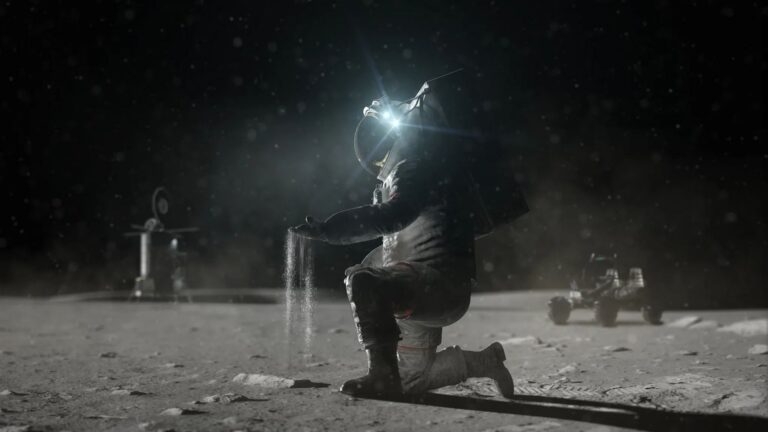
Engineers love a good practical challenge, especially when it comes to spaceflight. But there’s one particular challenge facing the crewed missions of the near future that scares mission planners above almost all others – fire. For decades, we’ve relied on a NASA test known as NASA-STD-6001B to screen material flammability for flight. But space is much more complicated than an Earth-bound test provides for. A new paper from researchers at NASA’s Glenn Research Center and Johnson Space Center and Case Western Reserve University details a planned mission to test the flammability of materials on the Moon’s surface – where they expect flame to act much differently than it does here on Earth.

As Though No Other Name Ever Existed – Why We Call Them “Black Holes.”

Featured

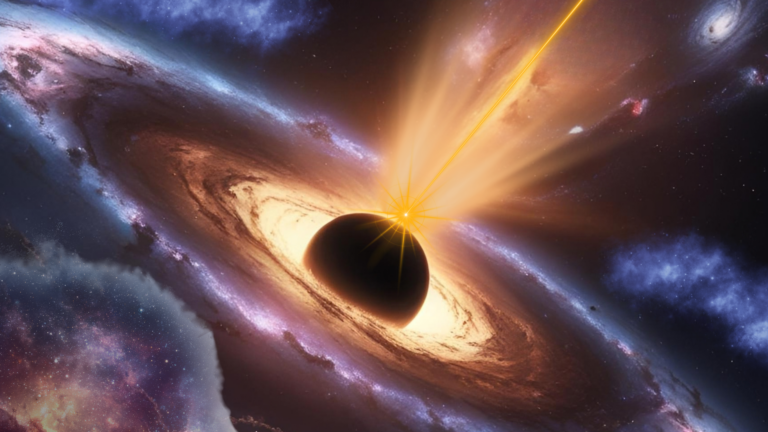
Given the breadth of information and depth of understanding that exists in popular culture about black holes, one could be forgiven if it is assumed that we understand nearly all there is to know about them. That is wrong, however. What is widely understood about black holes may fill an entire public library, but they are still an iceberg of mystery, of which we have only just scratched the surface. Continue ReadingAs Though No Other Name Ever Existed – Why We Call Them “Black Holes.”

Meet the Quantum Kid

Scientists are often advised to explain their work in terms that a child can understand—a task that is particularly challenging when it comes to such complex topics as quantum mechanics. It’s easier when the interviewer is an actual child, like 9-year-old Kai Moskvitch, aka the Quantum Kid. Kai and his mother, theoretical physicist and science communicator Katia Moskvitch, co-host The Quantum Kid podcast, which recently crossed the 100,000 subscriber mark and has been nominated for Continue ReadingMeet the Quantum Kid

Solar flares’ domino effect isn’t limited to the sun, 16,000-star sweep reveals

Our sun is a roiling mass of energy, with solar flares exploding on its surface, sending gas, plasma, and light that blasts across the solar system. When radiation from extra-powerful flares breaks through Earth’s outer protective magnetosphere, it can affect satellites and even electric grids and cause the aurora borealis—lighting up the night sky.

Why NASA’s Cheapest Missions Produce the Least Science

To say NASA has been undergoing some massive administrative changes lately is a huge understatement. One of the more concerning ones, according to a new paper at the 57th Lunar and Planetary Science Conference by Ari Koeppel and Casey Dreier of the Planetary Society, is the trend towards the Silicon Valley mindset of “move fast and break things” – which they argue doesn’t work very well when it comes to producing valuable science.

Titan’s lakes may spawn 10-foot waves in gentle winds, new model suggests

On a calm day, a light breeze might barely ripple the surface of a lake on Earth. But on Saturn’s largest moon, Titan, a similar mild wind would kick up 10-foot-tall waves. This otherworldly behavior is one prediction from a new wave model developed by scientists at MIT. The model is the first to capture the full dynamics of waves and what it takes to whip them up under different planetary conditions.

Blue Origin hot fires its first previously flown booster, prepares for weekend launch

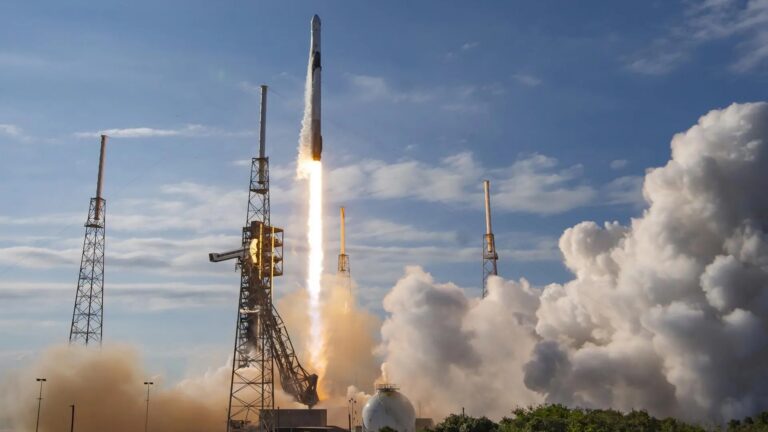
Blue Origin’s New Glenn rocket roars to life during a roughly 20-second static fire test of its seven BE-4 engines. Image: Adam Bernstein/Spaceflight Now Blue Origin’s New Glenn rocket roared to life in a critical pre-launch demonstration of its main engines Thursday, less than an hour after the Sun crested over the horizon in Florida. The seven BE-4 engines fired for about 20 seconds, at 7:45 a.m. EDT (1145 UTC). Engineers will now pore through Continue ReadingBlue Origin hot fires its first previously flown booster, prepares for weekend launch