A student-led experiment sets new limits in the search for axions

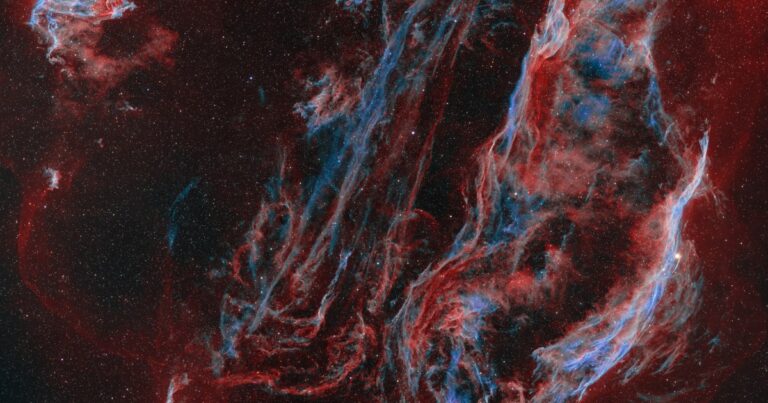
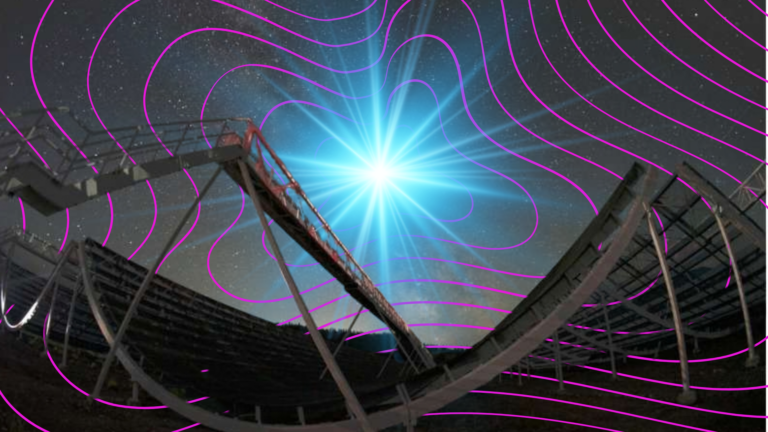
In the era of precision cosmology, research often means big science: large observatories, highly complex instruments, international collaborations and substantial funding. Yet even in such an advanced field, progress is still possible—including in the search for elusive dark matter—through more agile approaches, driven by small teams and young researchers, supported by institutions and a good dose of ingenuity.

After a saga of broken promises, a European rover finally has a ride to Mars

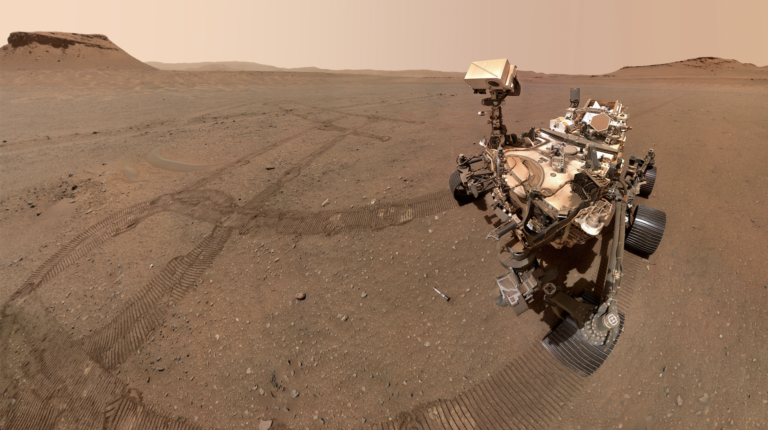
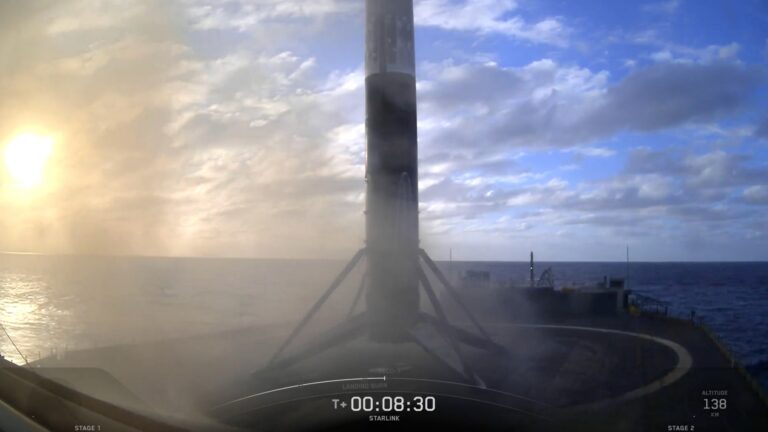
NASA confirmed Thursday that SpaceX will launch the European Space Agency’s Rosalind Franklin Mars rover, perhaps as soon as late 2028, on a Falcon Heavy rocket from Kennedy Space Center, Florida. So why is NASA deciding which rocket will launch a flagship European Mars mission? It’s a long story involving the search for extraterrestrial life, crippling political hatchets, and of all things, Russia’s invasion of Ukraine. You can trace the history of Europe’s Rosalind Franklin Continue ReadingAfter a saga of broken promises, a European rover finally has a ride to Mars

Methane emerges from interstellar comet 3I/ATLAS as it exits the solar system

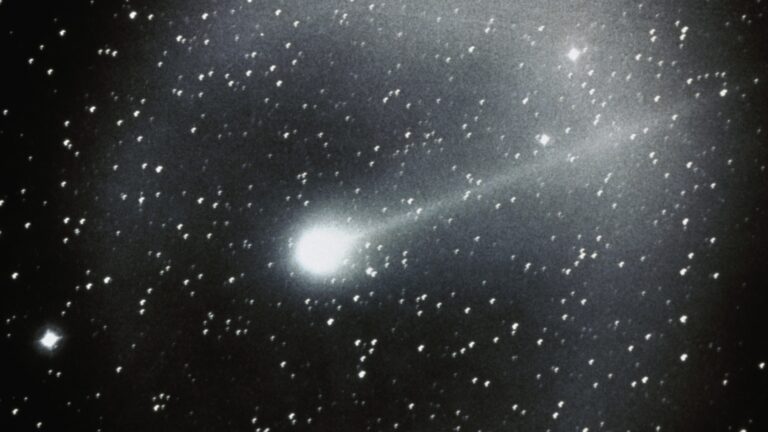
Interstellar comet 3I/ATLAS is now on its way out of our solar system, never to return. The comet was only the third-ever detected object to originate from outside our solar system. Traveling at high speeds, it looped around the sun within 1.5 AU (one AU, or astronomical unit, is the distance between Earth and the sun) in October 2025; as of April, it is now past the orbit of Jupiter on its way out of the solar system.

Weighing in on the mystery of the gravitational constant

The time had come to open the envelope, but Stephan Schlamminger, a physicist at the National Institute of Standards and Technology (NIST), wasn’t sure he wanted to know the secret number that lay inside. For the past 10 years, Schlamminger had spent most of his working hours trying to measure a single quantity, known as the universal gravitational constant, which determines the strength of gravity everywhere in the universe. The secret number would allow Schlamminger to unscramble his data and get his answer.

Landing astronauts on the moon ‘is absolutely doable, and it’s doable soon,’ NASA’s Artemis 2 commander says

The Artemis 2 astronauts said they gained a deeper understanding of their Orion capsule during their moon mission —and what they learned bodes well for future Artemis flights. Continue ReadingLanding astronauts on the moon ‘is absolutely doable, and it’s doable soon,’ NASA’s Artemis 2 commander says

eROSITA disentangles the solar system’s X-ray glow from deep-space signals

Max Planck Institute for Extraterrestrial Physics scientists have been able to disentangle the X-ray glow originating in our solar system from similar emission reaching us from deep space, using data from the SRG/eROSITA space telescope. Four sky maps obtained between 2019 and 2021 from a vantage point approximately 1.5 million km from Earth—approximately four times the moon’s distance—enabled the extraction of solar-wind charge exchange (SWCX) emission. The research is published in the journal Science.

Uranus’s two outer rings show starkly different origins

Astronomers using the W. M. Keck Observatory on Maunakea, Hawaiʻi Island are revealing new insight into the composition and origins of Uranus’s two outer rings. Using data from the Keck Observatory Archive (KOA), combined with observations taken by the Hubble Space Telescope (HST) and the James Webb Space Telescope (JWST), researchers constructed the first complete reflectance spectrum (sunlight reflected off the rings) of the μ and ν rings, confirming their colors and uncovering their detailed composition.

Navigating the past with ancient stone compass needles

Magnetic rocks with iron oxide concentrations act as natural chroniclers of Earth’s past continental movements. Using small samples of rocks, scientists can isolate magnetic grains that were frozen in orientation as the rock solidified. The magnetization of these grains acts as a miniature compass needle, pointing toward ancient magnetic poles. This same principle applies to extraterrestrial samples, such as meteorites and lunar rocks, which preserve evidence of the early solar nebula’s evolution.

PlanetiQ secures $15 million Air Force STRATFI contract

COLORADO SPRINGS – Commercial satellite operator PlanetiQ will develop and launch spacecraft equipped with next-generation instruments to gather terrestrial and space weather data with a $15 million U.S. Air Force Strategic Funding Increase (STRATFI) contract announced April 16. The STRATFI agreement is “a big indication from the U.S. government that our technology matters and they […] The post PlanetiQ secures $15 million Air Force STRATFI contract appeared first on SpaceNews.