The 10 best Stargate SG-1 episodes, ranked
Chevron seven, locked! Continue ReadingThe 10 best Stargate SG-1 episodes, ranked
Around 900,000 years ago, an impactor slammed into modern-day Kazakhstan and excavated a crater about 14 km in diameter. It was the most recent hypervelocity impactor powerful enough to trigger a nuclear winter, but not an exinction. New research suggests the crater is almost twice as large, showing that the energy released by the impact was much greater than thought.
Dark matter is believed to make up a large fraction of the matter in the universe, yet its true nature remains unknown. Most past experiments have focused on heavier dark matter candidates, while much lighter dark matter, with masses closer to the mass of a neutrino, has been difficult to detect directly because its scattering signals are extremely weak.
In quantum physics, objects can exist in multiple states at the same time—a phenomenon known as quantum superposition, where a particle does not have a single definite value of position or momentum until it is measured. A major open question is whether gravity, one of the fundamental forces, also follows the quantum rule. One way to examine this is through gravity-induced entanglement, in which two objects that interact only via gravity become quantum mechanically linked.
Picture this: your brain is a high-performance engine. Over decades, it doesn’t just wear down, it also starts to run hot. Tiny “fires” of inflammation smolder deep within the brain’s memory center, creating a persistent brain fog that makes it harder to think, form new memories or even adapt to new environments, all the while increasing the risk to disorders like Alzheimer’s disease.
NASA’s Artemis 2 moon mission wowed the world enough to earn a space spoof skit on Saturday Night Live one day after a perfect splashdown. Watch how it went. Continue ReadingNASA’s Artemis 2 moon shot just landed on Saturday Night Live — It’s hilarious (video)
HOUSTON—Their mission is complete. The four people who flew beyond the Moon on NASA’s Artemis II mission are back home in Houston with their families. But the lessons from Artemis II are just beginning to be told. There are tangible, objective takeaways from the nine-day mission. How did NASA’s Space Launch System rocket perform? Nearly perfectly. Was the Orion spacecraft up to the job of flying to the Moon and back? Absolutely. Will engineers need Continue ReadingNASA chose the right crew to launch a new era of human space exploration
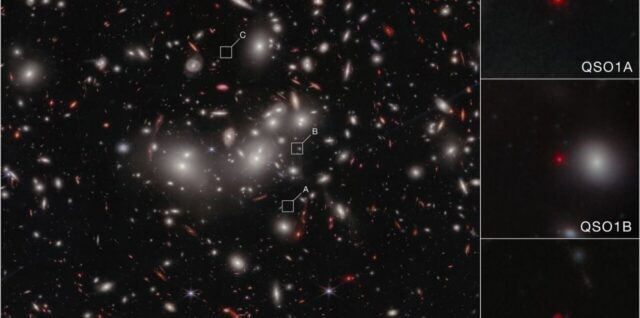
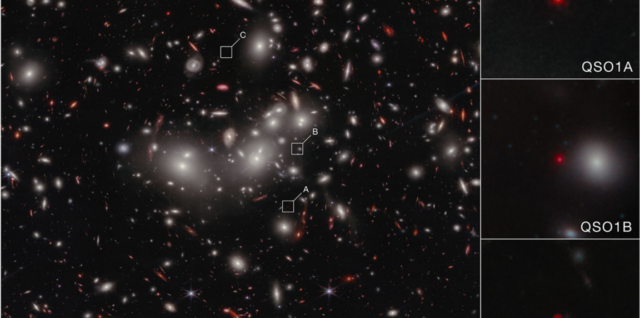
“The discovery of this exceptional object has allowed us to accurately study the nature of the stars at the center of an elliptical galaxy in a remote era of the universe, when the galaxy was still young.” Continue ReadingScientists use rare ‘Einstein Cross’ to learn about young galaxy with surprisingly old stars
“Rise Wiseman” might be the most beloved mission mascot in history. Continue ReadingThis Artemis 2 astronaut really loves Rise | Space photo of the day for April 14, 2026
Venus, often called Earth’s twin, is in fact a planet of extremes. Beneath its thick carbon dioxide atmosphere are crushing surface temperatures and dense clouds of sulfuric acid. While the planet’s main cloud layer sits between 47 and 70 kilometers above the surface, scientists have long been puzzled by a mysterious layer of particles below 47 kilometers, known as the “lower haze.” First detected by spacecraft in the 1970s, the origin of this haze remained unexplained for more than half a century.
What do bats do at night when they’re not hunting? Using tiny GPS trackers, Leiden researchers discovered that pond bats spend a substantial portion of the night resting—often outdoors. This surprising insight could change the way we protect them. “To rest or to roam: Functional habitat use of an insectivorous bat species during active and resting behavior” is published in Biological Conservation.
A little patience, luck and a well-placed camera can still deliver a dazzling fireball — even from a city. Continue ReadingThe Lyrids are coming! How I watch meteor showers from the middle of a city
Using NASA’s Chandra X-ray space telescope, astronomers have performed high-resolution X-ray spectroscopic observations of a bright low-mass X-ray binary known as GX 340+0. Results of the observational campaign, published April 3 on the arXiv pre-print server, shed more light on the composition of interstellar medium (ISM) in this system.
Astronauts aboard Artemis 2 and the ISS connected across a record-breaking Earth–moon distance in the farthest crew call ever made in space. Continue ReadingTalk about long distance! Watch the farthest-ever crew call in space between Artemis 2 and the ISS
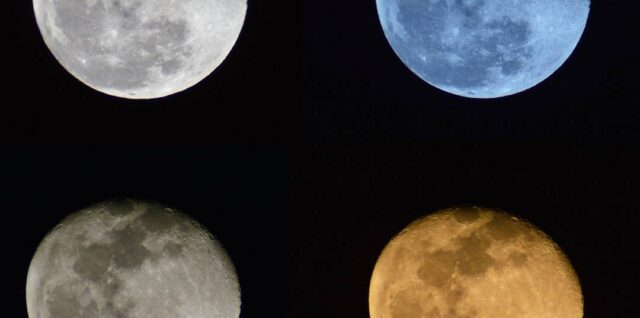
New research shows that craters near the moon’s south pole that have been in permanent shadow the longest are more likely to contain the most water ice. Continue ReadingThe moon’s oldest and darkest craters could be hiding the most water ice. That’s good news for future astronauts
The IBeA group of the EHU-University of the Basque Country is proposing new measures to safeguard the purity of extraterrestrial samples. Several contaminants, including traces of ink, originating in the preparation of subsamples, have been identified in Martian meteorites by the EHU’s research group. The finding highlights the importance of stricter protocols to prevent misinterpretations of the composition of these rocks and to ensure the reliability of future studies and Mars sample-return missions. The research is published in the journal Applied Geochemistry.
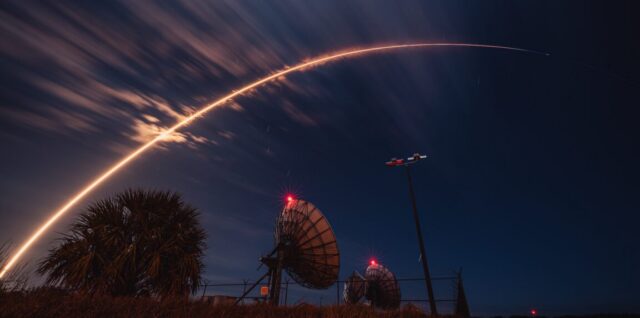
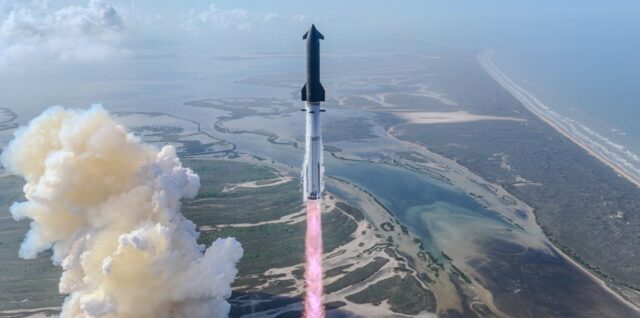
File: A SpaceX Falcon 9 rocket stands at Space Launch Complex 40 (SLC-40) at Cape Canaveral Space Force Station. Image: Adam Bernstein/Spaceflight Now SpaceX is set to launch its 1,000th Starlink satellite so far in 2026 with an early morning Falcon 9 rocket launch Tuesday morning from Cape Canaveral Space Force Station. The Starlink 10-24 mission will send 29 broadband internet satellites into low Earth orbit. This is SpaceX’s 37th dedicated Starlink mission of the Continue ReadingLive coverage: SpaceX to launch 1,000th Starlink satellite of 2026 on Falcon 9 rocket from Cape Canaveral
For the first time, new theoretical models, published in Astronomy & Astrophysics, connect the magnetism at the surface of long-dead stellar remnants (white dwarfs) with recent evidence of magnetism at the cores of their dying progenitors (red giants). The team, led by astrophysicists at the Institute of Science and Technology Austria (ISTA), argues that these magnetic fields might originate early in the stars’ lives, and survive their entire evolution, emerging as “fossil fields” at the surfaces of older remnants. A better understanding of these processes can also help to better understand our own sun’s future.