Magnetism Frozen in Time.

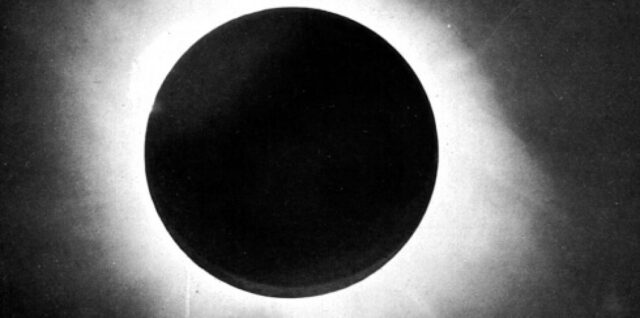
Every star you’ve ever looked at is hiding a magnetic secret and it may have been hiding it since birth. A new theoretical study has connected, for the first time, the magnetic fields detected deep inside dying red giants with the magnetism found at the surfaces of their long dead remnants. These fields may be ancient fossils, born early in a star’s life and surviving billions of years of violent transformation completely intact.

A New Eye Opens at the Top of the World.

Thirty four years ago, a group of Cornell scientists looked at a remote Chilean mountaintop and imagined what might be built there one day. That day has arrived. The Fred Young Submillimeter Telescope has just opened its eyes on the universe from one of the most extreme observatory sites ever chosen, and the science it promises to deliver from the first moments after the Big Bang to the hidden nurseries of newborn stars.

The Sharpest Eyes on the Sun The Sharpest Eyes on the Sun.

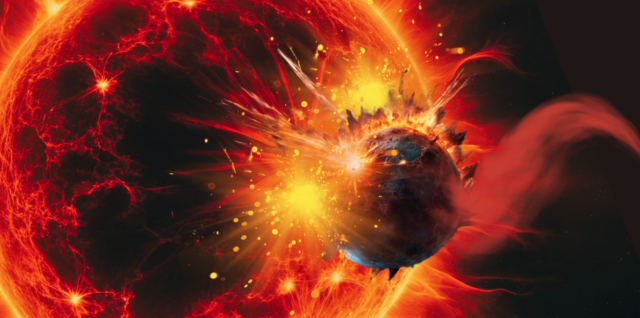
The Sun is the most studied star in the universe, yet some of its most violent behaviour remains stubbornly out of reach. Solar flares, explosive eruptions that can disrupt satellites, knock out power grids and bathe astronauts in radiation release enormous bursts of X-rays that carry vital clues about what drives them. Now, a team of Japanese engineers has built the sharpest X-ray telescope ever to fly on a solar mission, and the technology it has pioneered could soon fit inside a satellite the size of a shoebox.

Subaru telescope captures comet 3I/ATLAS composition change

The Subaru Telescope observed the interstellar comet 3I/ATLAS on January 7, 2026, after it made its closest approach to the sun. By observing colors in the coma around the comet, astronomers could estimate the ratio of carbon dioxide to water. This ratio is much lower than that inferred from earlier observations by space telescopes. These findings suggest that the chemistry of the coma is evolving over time and offers clues to the structure of comet 3I/ATLAS. The work appears in The Astronomical Journal.

Are Neutrinos Their Own Evil Twins? Part 4: Majorana’s Mystery

In 1937, Ettore Majorana asked a question nobody else was even thinking about: does a particle have to have a distinct antiparticle? For neutrinos — which carry no charge — the answer might be no. They might be their own antiparticles. Deep underground right now, experiments are watching atoms decay, waiting for the signal that would prove it. So far: nothing. But the case is not closed.

Live Coverage: West Coast SpaceX Falcon 9 mission to launch 25 Starlink satellites

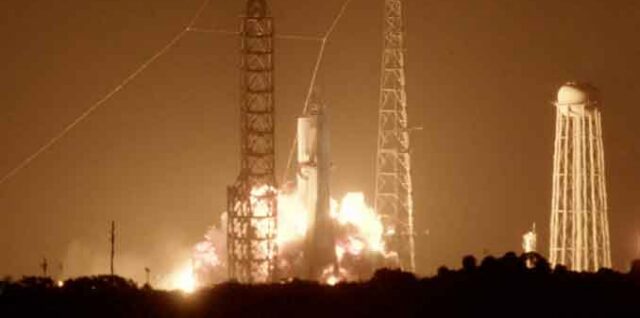
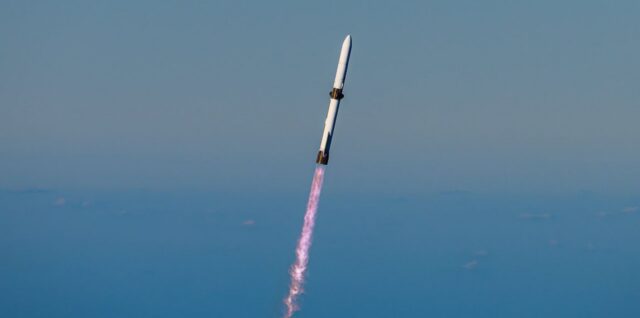
A Falcon 9 rocket stands poised to launch from the Space Launch Complex 4E at Vandenberg Space Force Base in California. File Photo: SpaceX SpaceX is counting down to the launch of a Falcon 9 rocket from Vandenberg Space Force Base in California, carrying another 25 satellites for its Starlink internet service. Liftoff from Space Launch Complex 4 East is scheduled for 9:29:49 p.m. PDT (12:29:49 a.m. EDT / 04:29:49 UTC). The Falcon 9 will Continue ReadingLive Coverage: West Coast SpaceX Falcon 9 mission to launch 25 Starlink satellites

Young stars dim quickly in their X-ray output, potentially benefiting orbiting planets

Scientists have found that young stellar cousins of our sun are calming down and dimming more quickly in their X-ray output than previously thought, according to a new study using NASA’s Chandra X-ray Observatory. A paper describing the results is published in The Astrophysical Journal. Unlike in the new movie “Project Hail Mary,” this quieting of young stars is a benefit for the prospects for life on orbiting planets around these stars, not a threat.

Catching distant gamma-ray explosions with precisely aligned X-ray optics

Gamma-ray bursts (GRBs) rank among the most powerful explosions in the universe, releasing immense energy in intense flashes of gamma rays. The most distant GRBs originate from the era when the first stars and galaxies formed. Detecting them allows astronomers to probe the early universe and understand how the first heavy elements formed and how the earliest stellar populations lived and died. Missions like HiZ-GUNDAM, a satellite planned for launch in the 2030s by the Japan Aerospace Exploration Agency (JAXA), aim to detect these distant explosions in real time.

NASA’s Artemis 2 moonshot was just the ‘opening act’ for America’s return to the moon, space agency chief says

Artemis 2 kicks off a lunar “relay race” that will lead the NASA and its international partners to a moon base and, eventually, Mars, NASA chief Jared Isaacman says. Continue ReadingNASA’s Artemis 2 moonshot was just the ‘opening act’ for America’s return to the moon, space agency chief says

The Incredible Shrinking Neutrino.

They are the most abundant particles in the universe, yet we barely know they exist. Neutrinos stream through everything, through walls, through planets and even through you…. in their billions every second, leaving no trace. We’ve known for decades that they have mass, but pinning down exactly how much has defeated physicists for years. Now, the most sensitive experiment ever built has pushed our knowledge to a new frontier, and what it found raises a profound question about why these ghostly particles are so extraordinarily light.

The Universe’s Most Powerful Telescope.

When a massive star explodes on the far side of the universe, the light from that explosion normally fades long before it reaches us. But occasionally, the universe conspires to help. A newly discovered supernova has been caught using the gravity of an entire galaxy as a natural magnifying glass, boosting its light by at least a hundred times and revealing a stellar death that would otherwise have been completely invisible. It is the most magnified supernova ever found, and it opens a remarkable new window onto the distant universe.

Reading the Moon’s Buried Past.

The lunar south pole is where humanity plans to build its first permanent outpost but we still don’t fully understand what lies beneath the surface. A new study has used radar to peer below the ground in one of the Moon’s most complex and battered regions and what it’s finding raises important questions about the geological minefield that future astronauts will be navigating. Ancient impacts, frozen melt sheets, and billions of years of overlapping debris may complicate our plans more than we thought.

Shredded stars reveal how black holes ignite trillion-sun flares

Supermassive black holes are among the most enigmatic objects in the universe. They typically weigh millions or even billions of times the mass of the sun and sit at the centers of most large galaxies. At the heart of the Milky Way lies Sagittarius A*, our galaxy’s supermassive black hole, with a mass of about four million suns. But these black holes do not emit light, so astronomers can only detect them indirectly through their effects on nearby stars and gas.