
![[Aggregator] Downloaded image for imported item #60687](https://astrobitica.com/wp-content/uploads/2026/06/20260604_Starlink_10-43_liftoff_JP-1.jpeg)
Update June 4, 6:54 a.m. EDT (1054 UTC): SpaceX landed its booster on the drone ship.
Update June 3, 7:24 a.m. EDT (1124 UTC): SpaceX scrubbed the launch.
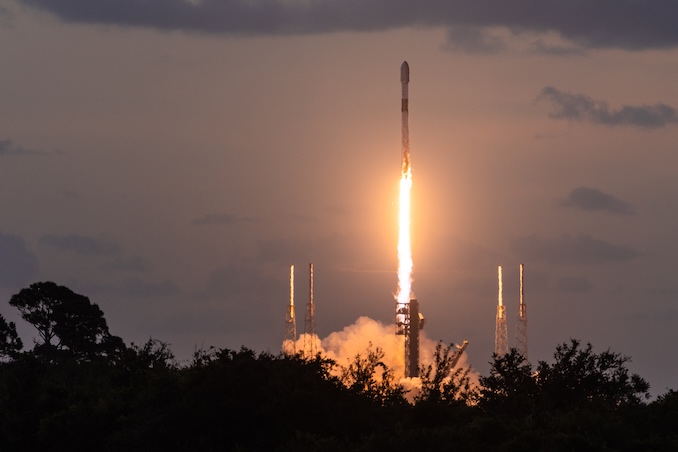
The second time proved to be the charm as SpaceX launched its Falcon 9 rocket from Cape Canaveral Space Force Station on Thursday morning. It came about 24 hours after a scrub on Wednesday due to poor weather that proved insurmountable.
The Starlink 10-43 mission will add 29 broadband internet satellites to the company’s low Earth orbit constellation. It consists of more than 10,000 spacecraft.
Liftoff from Space Launch Complex 40 happened at Thursday, June 4, 6:26:30 a.m. EDT (1026:30 UTC). The Falcon 9 rocket flew on a north-easterly trajectory upon leaving the pad.
The 45th Weather Squadron forecast a 95 percent chance for favorable weather during the launch window on Thursday. Meteorologists were tracking a small chance for interference from cumulus clouds.
“Mid to upper-level clouds will persist but will most likely be too high to pose an LLCC concern. Latest model guidance has become drier behind the front with the latest runs, leading to a drop in POV for the initial launch window Thursday morning,” launch weather officers wrote.
SpaceX launched the mission using the Falcon 9 first stage booster with the tail number B1090. This was its 12th flight after launching missions, like NASA’s Crew-10, CRS-33 and Bandwagon-3.
Nearly 8.5 minutes after liftoff, B1090 landed on the drone ship, ‘A Shortfall of Gravitas,’ positioned in the Atlantic Ocean off the coast of South Carolina. This was the 153rd landing on this vessel and the 619th booster landing to date.
About the Author
