‘Immature’ lunar soil could be suitable for roadways on the moon

Between the Artemis Program, the ESA’s Moon Village, and the Sino-Russian International Lunar Research Station (ILRS), the next step in space exploration is clear: we’re going back to the moon, and this time, to stay! This plan requires significant investment, research, development, and strategies adapted to lunar conditions. In particular, mission planners are concerned about the hazard posed by lunar regolith (aka “moon dust”). In addition to being electrostatically charged, causing it to stick to literally any surface, it is incredibly fine and easily kicked up by rovers and spacecraft as they land and take off.

How resilient fungus might survive Mars and space

Scientists have long known that fungi are resilient, but a new study suggests that some strains might survive every step of the long, brutal trip to Mars. In a paper published in Applied and Environmental Microbiology, researchers isolated fungal microbes from NASA cleanrooms—facilities used in the assembly, testing, and launch of spacecraft—that had persisted after decontamination.

Only 12 people on Earth saw this ‘ring-of-fire’ eclipse. Here’s how one improvised to capture a once-in-a-lifetime photo from Antarctica

A remote Antarctic research team became the only people on Earth to witness a rare annular solar eclipse — and one scientist had to improvise to capture it. Continue ReadingOnly 12 people on Earth saw this ‘ring-of-fire’ eclipse. Here’s how one improvised to capture a once-in-a-lifetime photo from Antarctica

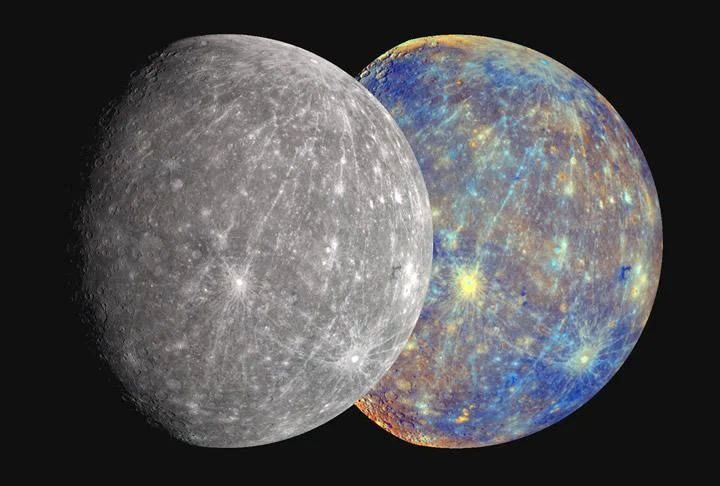
Sulfur-rich Mercury magmas behave differently than Earth’s do

Mercury is a small, rocky planet about which researchers know relatively little. Two missions, taking readings as they passed over the planet, have revealed that Mercury is covered by an iron-poor and sulfur-rich crust. It is also reduced, a chemical state in which the substances have gained electrons. In fact, it’s the most reduced planet in the solar system.

Blue Origin’s rocket reuse achievement marred by errant satellite deployment

The third flight of Blue Origin’s heavy-lift New Glenn launcher began Sunday with the company’s first successful reflight of an orbital-class booster, but ended with a setback for Jeff Bezos’ flagship rocket, a key element in NASA’s Artemis lunar program. The 321-foot-tall (98-meter) New Glenn launch vehicle ignited its seven methane-fueled BE-4 engines at 7:25 am EDT (11:25 UTC) Sunday, beginning a slow climb from its launch pad at Cape Canaveral Space Force Station, Florida. Continue ReadingBlue Origin’s rocket reuse achievement marred by errant satellite deployment

These blazing blue explosions may be born when a compact dead star slams into a Wolf-Rayet star

Luminous fast blue optical transients (LFBOTs) are among the universe’s brightest and fastest explosions but their origin is not completely understood. A new study takes a closer look at the galaxies they occur in, offering two important clues about their nature. A paper outlining these results was uploaded to the preprint server arXiv on March 24.

Theoretical models of supernova chemistry overhauled after X-ray data from Perseus Cluster reveal key discrepancies

The Perseus Cluster is a massive galaxy cluster located in the constellation Perseus. It is one of the largest structures in the observable universe, comprising more than a thousand galaxies—equivalent to roughly a thousand trillion times the mass of the sun. Hot gases within the cluster, known as the intracluster medium (ICM), emit powerful X-rays detectable by telescopes. These gases are produced by billions of supernova explosions, and their chemical composition reveals how typical supernovae have exploded throughout cosmic history.

Blue Origin just launched the giant Bluebird 7 mobile phone satellite into space — but it’s in the wrong orbit

Blue Origin, the space launch company founded by Jeff Bezos, achieved a successful recovery of its first reused orbital-class rocket, but the payload it put into space was left in the wrong location. Continue ReadingBlue Origin just launched the giant Bluebird 7 mobile phone satellite into space — but it’s in the wrong orbit