Exoplanets Without Lots of Water Can’t Maintain Their Carbon Cycles

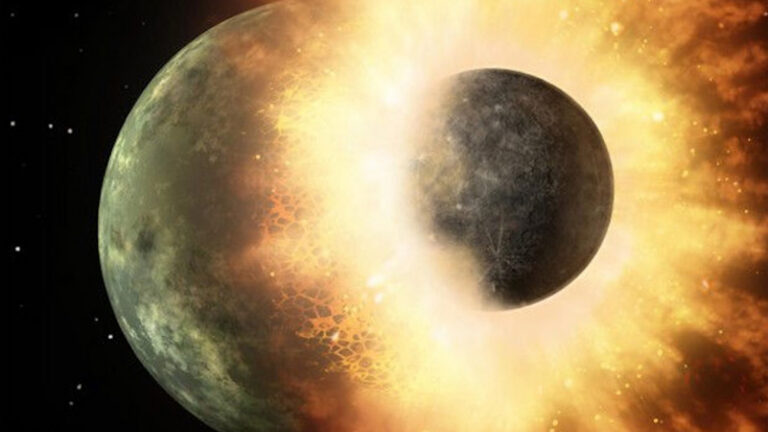
Water is critical to life because cells need liquid to function. That’s why scientists focus on finding and studying exoplanets in habitable zones. But even if they’re in habitable zones, exoplanets need lots of water to support their carbon cycles. So without water, exoplanets become inhospitable greenhouse planets, regardless if they’re in habitable zones or not.

I’ve fired one of America’s most powerful lasers—here’s what a shot day looks like

If you walk across the open yard in front of the Physics, Math and Astronomy building at the University of Texas at Austin, you’ll see a 17-story tower and a huge L-shaped building. What you won’t see is what’s underneath you. Two floors below ground, behind heavy double doors stamped with a logo that most students have never noticed, sits one of the most powerful lasers in the United States.

Hubble dazzles with young stars in Trifid Nebula

This shimmering region of star-formation, a close-up of the Trifid Nebula about 5,000 light-years from Earth, was captured in intricate detail by NASA’s Hubble Space Telescope. The colors in Hubble’s visible light image, which marks the 36th anniversary of the mission’s launch on April 24, are reminiscent of an underwater scene filled with fine-grained sediments fluttering through the ocean’s depths.

How do astronauts adapt their grip and move objects when transitioning between Earth and space?

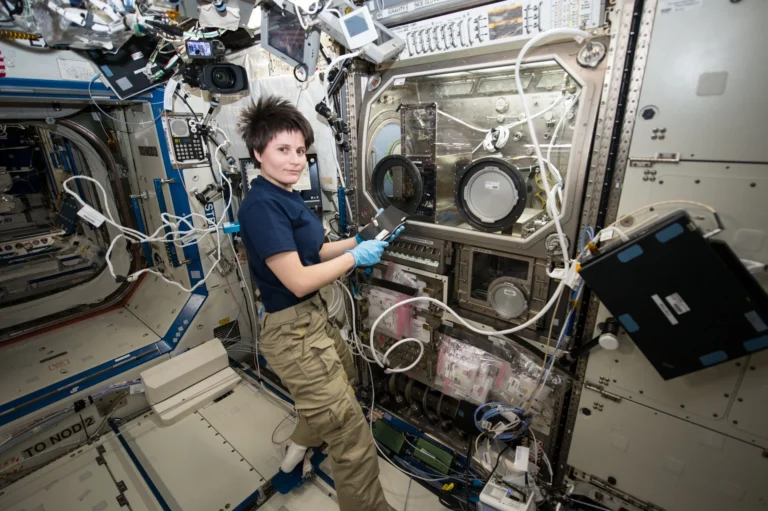
On Earth, people grip objects to ensure they don’t fall. In space, this process changes: When astronauts hold an object without moving it and then let go, the object doesn’t fall because there is no gravity. But when astronauts move the object any which way, inertia takes the object up, down, left, or right if the hand grip is not steady.

NASA’s SPHEREx Telescope Just Mapped the Cosmic Ices That Will Someday Build Planets

New missions mean new capabilities – and one particularly interesting new mission is finally up and running. Data is starting to come in from SPHEREx, the medium-class surveyor that is mapping the entire sky every six months. A paper based on some of that early data was recently published in The Astrophysical Journal, mapping ice and compounds called Polycyclic Aromatic Hydrocarbons (PAHs) throughout some interesting regions of our Milky Way.

NASA shuts off instrument on Voyager 1 to keep spacecraft operating

On April 17, engineers at NASA’s Jet Propulsion Laboratory (JPL) in Southern California sent commands to shut down an instrument aboard Voyager 1 called the Low-energy Charged Particles experiment, or LECP. The nuclear-powered spacecraft is running low on power, and turning off the LECP is considered the best way to keep humanity’s first interstellar explorer going.

Blue Origin launches third New Glenn rocket, but payload ends up in wrong orbit

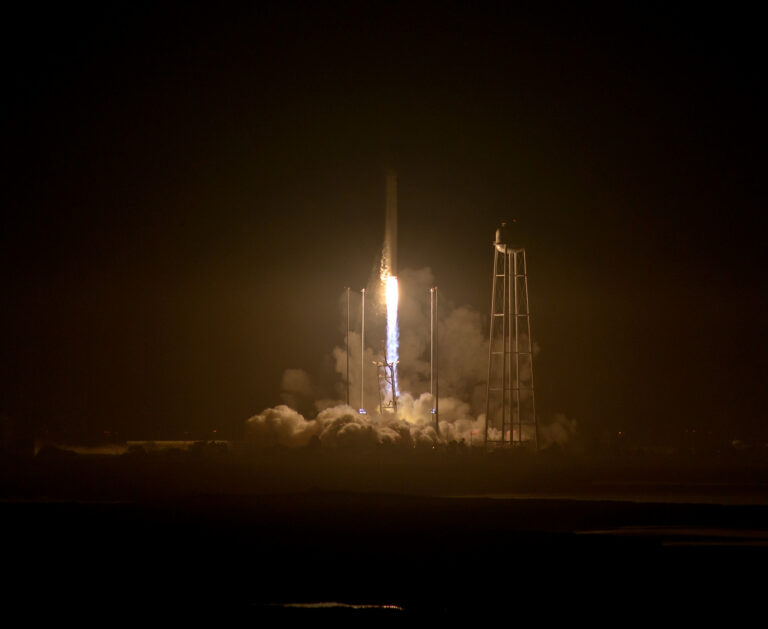
Spectators along the beach in Cape Canaveral, Florida, enjoy a spectacular Sunday morning launch, taking in the view of a Blue Origin New Glenn rocket blasting off carrying a next-generation cellular broadband satellite. The company said later the AST SpaceMobile Bluebird 7 satellite ended up in the wrong orbit. Photo: Adam Bernstein/Spaceflight Now. Blue Origin launched the company’s third New Glenn rocket Sunday, re-flying and successfully recovering a previously used first stage. But the rocket’s Continue ReadingBlue Origin launches third New Glenn rocket, but payload ends up in wrong orbit

‘Immature’ lunar soil could be suitable for roadways on the moon

Between the Artemis Program, the ESA’s Moon Village, and the Sino-Russian International Lunar Research Station (ILRS), the next step in space exploration is clear: we’re going back to the moon, and this time, to stay! This plan requires significant investment, research, development, and strategies adapted to lunar conditions. In particular, mission planners are concerned about the hazard posed by lunar regolith (aka “moon dust”). In addition to being electrostatically charged, causing it to stick to literally any surface, it is incredibly fine and easily kicked up by rovers and spacecraft as they land and take off.

How resilient fungus might survive Mars and space

Scientists have long known that fungi are resilient, but a new study suggests that some strains might survive every step of the long, brutal trip to Mars. In a paper published in Applied and Environmental Microbiology, researchers isolated fungal microbes from NASA cleanrooms—facilities used in the assembly, testing, and launch of spacecraft—that had persisted after decontamination.

Only 12 people on Earth saw this ‘ring-of-fire’ eclipse. Here’s how one improvised to capture a once-in-a-lifetime photo from Antarctica

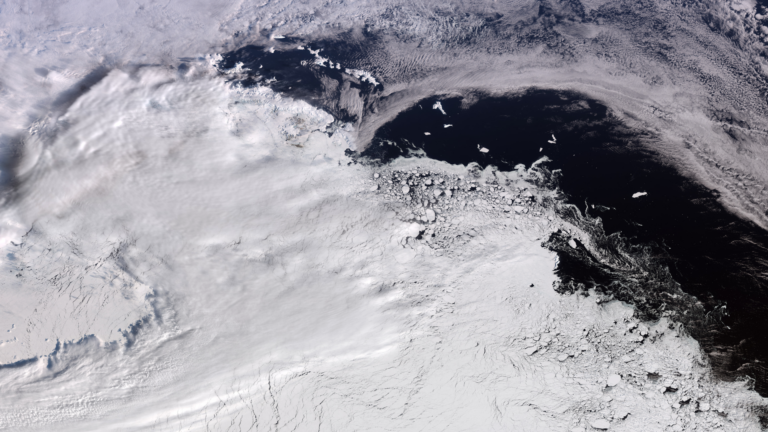
A remote Antarctic research team became the only people on Earth to witness a rare annular solar eclipse — and one scientist had to improvise to capture it. Continue ReadingOnly 12 people on Earth saw this ‘ring-of-fire’ eclipse. Here’s how one improvised to capture a once-in-a-lifetime photo from Antarctica