President Trump signs legislation reauthorizing SBIR

COLORADO SPRINGS – President Donald Trump signed the Small Business Innovation and Economic Security Act April 13, reestablishing key sources of funding for early-stage space companies. The legislation reauthorizes the Small Business Innovation Research (SBIR) and Small Business Technology Transfer (STTR) programs through Sept. 30, 2031, and enhances screening of applicants to ensure they do […] The post President Trump signs legislation reauthorizing SBIR appeared first on SpaceNews.

Are Neutrinos Their Own Evil Twins? Part 3: Dirac’s Direct Solution

Neutrinos have mass — yet they never flip between left- and right-handed states the way every other massive particle does. The most logical fix is Paul Dirac’s: invisible right-handed neutrinos that interact with nothing whatsoever. The math works. It even produces a beautiful explanation for why neutrino masses are so absurdly tiny. But it requires believing in particles that are permanently, in-principle undetectable.

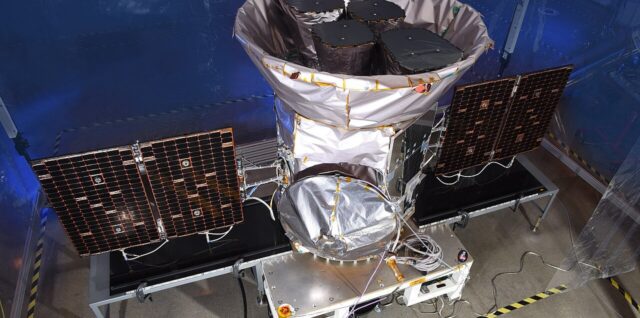
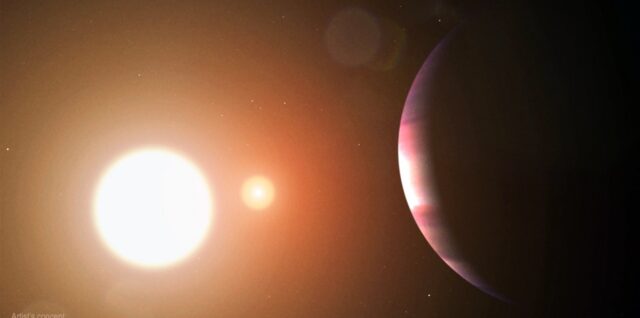
Exoplanet Host Star Shares Elemental Traits with Its Hot Jupiter

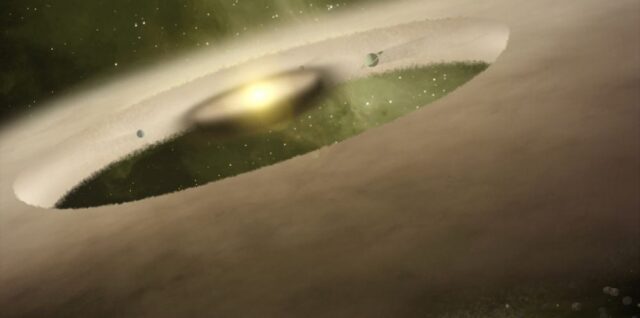
An ultra-hot Jupiter exoplanet orbiting a nearby star gave scientists using the Gemini South telescope a look at how both a star and its hot planet can have similar chemical compositions. The team, led by Arizona State University graduate student Jorge Antonio Sanchez, took spectra of the planet, called WASP-189b, using the Immersion Grating Infrared Spectrograph instrument. The observations measured the abundance of magnesium compared to silicon in the hot planet’s atmosphere and allowed the team to compare it to the makeup of its parent star.

The Most Quiet Place We’ve Ever Listened From!

For the first time in history, scientists have used a spacecraft on the far side of the Moon to search for signals from extraterrestrial intelligence. China’s Chang’E-4 lander sat in the most radio quiet location humanity has ever placed an instrument, shielded from Earth’s constant electronic chatter by the entire bulk of the Moon itself. They found nothing but that is almost beside the point!

Saturn’s Magnetic Shield Is Not Where Anyone Expected It To Be.

Saturn is one of the most recognisable and studied planets in the Solar System, it was the first thing I ever saw through a telescope and yet it is still finding ways to surprise us. New research analysing data from NASA’s Cassini spacecraft has revealed a significant and unexpected quirk in Saturn’s protective magnetic bubble, one that confirms the giant planets of our Solar System play by completely different rules to Earth.

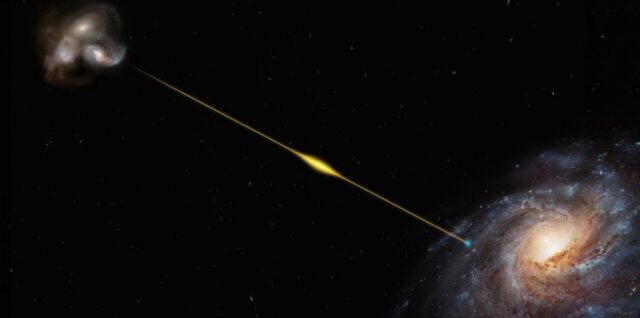
Two Monsters, One Galaxy, and a Collision 100 Years Away!

Deep in the heart of a distant galaxy, two monsters are locked in a death spiral and for the first time, they have been caught them in the act. A new study has confirmed the first close pair of supermassive black holes ever detected, orbiting each other every 121 days and closing in fast. If the models are right, they could collide within a century.

Artemis II crew used modern photography to tell the story of their lunar journey—and update some classic Apollo images

At this point in NASA’s human spaceflight story, researchers have a substantial amount of material—documents, artifacts and images—with which to tell the stories of past flights to space. But with NASA’s Artemis II mission around the moon now in the books, we’re getting a refreshed look at space.

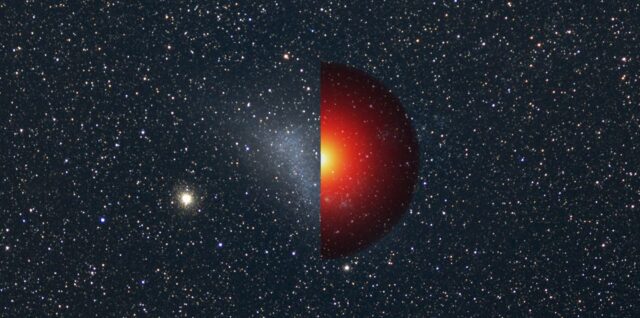
Is the moon more iron-rich than what we thought?

The moon is Earth’s only natural satellite, a rocky celestial body that orbits our planet at an average distance of about 384,000 kilometers. The most widely accepted scientific explanation for the moon’s origin is the “giant impact,” a high-energy collision between a Mars-sized proto-planet named Theia with the young “proto-Earth” about 4.5 billion years ago. As the newly formed moon cooled down from a hot magma ocean, layers with varying iron-content and mineral compositions crystallized to form the moon’s structure that we know today.

See and hear galaxies evolve from the dawn of the universe

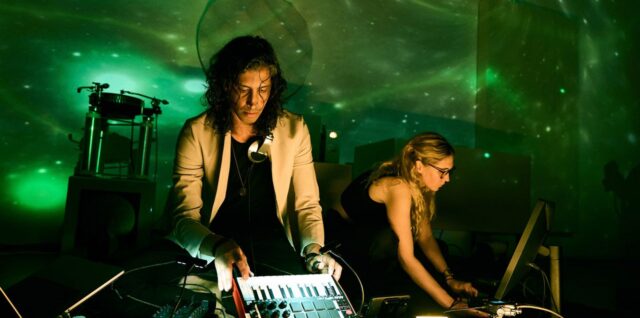
The most realistic picture yet of how galaxies formed and then evolved from the beginning of time has been revealed in a suite of new and unique audiovisual simulations. These data, accepted for publication in the Monthly Notices of the Royal Astronomical Society, show that the standard cosmological model can successfully explain the observed growth of galaxies, from the first billion years after the Big Bang to the present day, when key physics is included.

How Artemis 2 commander Reid Wiseman saved the mission’s moon mascot: ‘It’s hard not to love this little guy. I can’t let Rise out of my sight’

Rise joined the Artemis 2 crew as a mascot of the moon, bearing 5.6 million names. But the mascot quickly took on a new meaning. Continue ReadingHow Artemis 2 commander Reid Wiseman saved the mission’s moon mascot: ‘It’s hard not to love this little guy. I can’t let Rise out of my sight’

Artemis 2 commander Reid Wiseman broke NASA protocol to save the mission’s moon mascot: ‘It’s hard not to love this little guy. I can’t let Rise out of my sight’

Rise joined the Artemis 2 crew as a mascot of the moon, bearing 5.6 million names. But the mascot quickly took on a new meaning. Continue ReadingArtemis 2 commander Reid Wiseman broke NASA protocol to save the mission’s moon mascot: ‘It’s hard not to love this little guy. I can’t let Rise out of my sight’

Dead leaves now linger longer in Veluwe forests as acidic soils suppress decay

Decomposition of dead leaves in Veluwe forests has declined by tens of percent since the turn of the century. Meteorologists from Wageningen University & Research discovered this in an analysis of long-term measurements. The cause appears to lie in soil acidity. This is noteworthy because nitrogen deposition in the area has actually decreased over the same period. The effects of nitrogen entering the ecosystem in the past may still be lingering.

Live coverage: Space Station to capture, berth Cygnus XL ’S.S. Steven R. Nagel’ cargo spacecraft

Northrop Grumman’s Cygnus XL cargo spacecraft, with its two prominent cymbal-shaped UltraFlex solar arrays, is in the grasp of the Canadarm2 robotic arm before being released from the International Space Station on March 12, 2026. Image: NASA/Jessica Meir The next cargo run to the International Space Station will arrive at the orbiting outpost midday on Monday. Northrop Grumman’s Cygnus XL spacecraft is expected to be captured by the Canadarm2 on the ISS around 12:50 p.m. Continue ReadingLive coverage: Space Station to capture, berth Cygnus XL ’S.S. Steven R. Nagel’ cargo spacecraft