
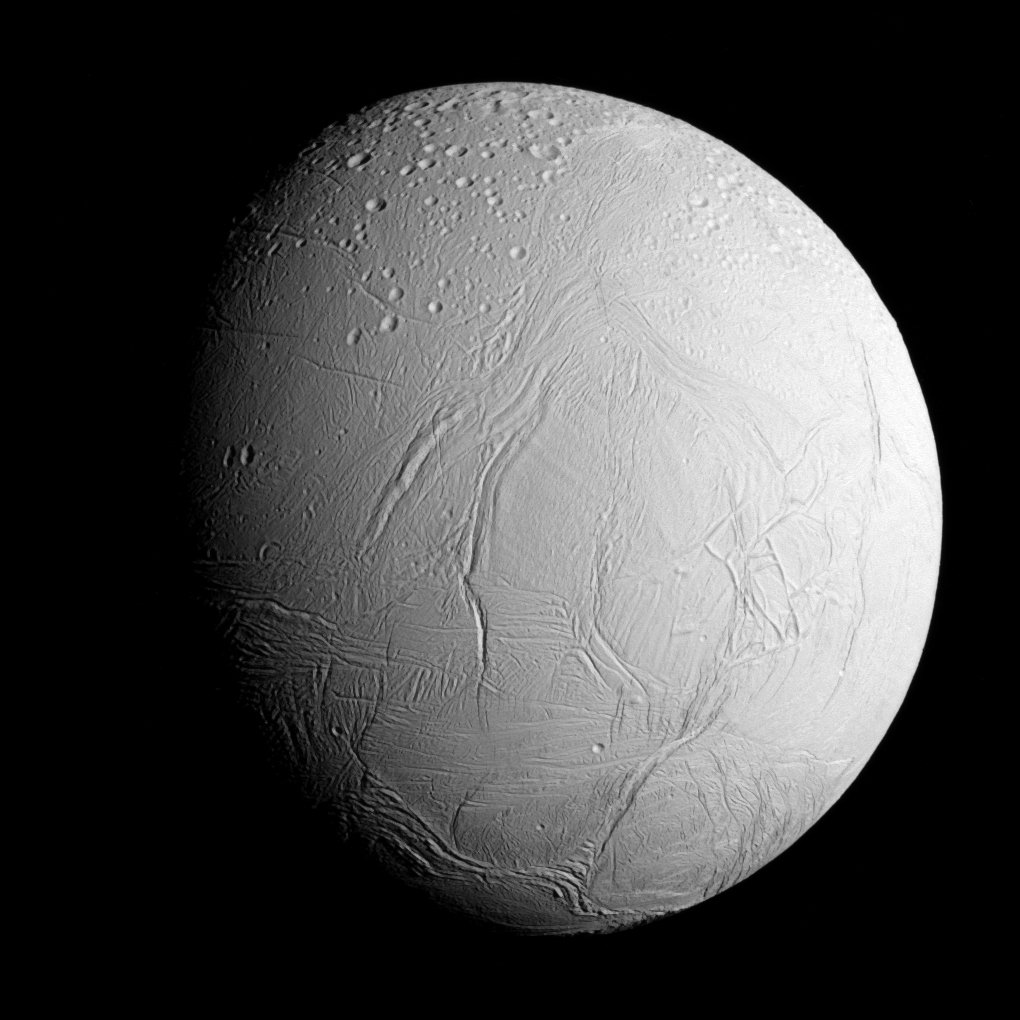
I still remember the first time I saw Saturn through a 10 inch telescope when I was ten years old. It looked just like it did in pictures, a pale yellow disk circled by its stunning ring system. What I couldn’t see then were Saturn’s moons, including the small, icy world of Enceladus that has since become one of the most exciting targets in the search for life beyond Earth. This tiny moon shoots spectacular plumes of water from cracks in its frozen surface, plumes that contain organic molecules. But a new study suggests we shouldn’t get too excited about what these molecules actually tell us about the possibility of life.
About the Author
