Why Does Jupiter Have More Large Moons than Saturn?
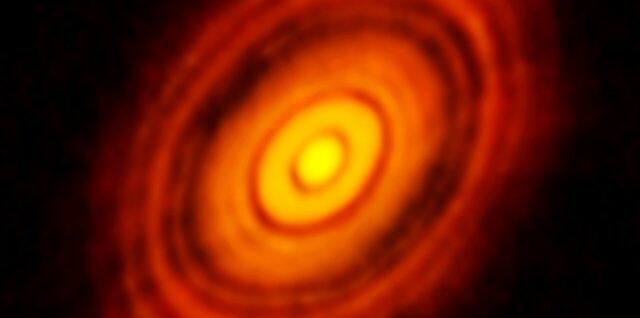
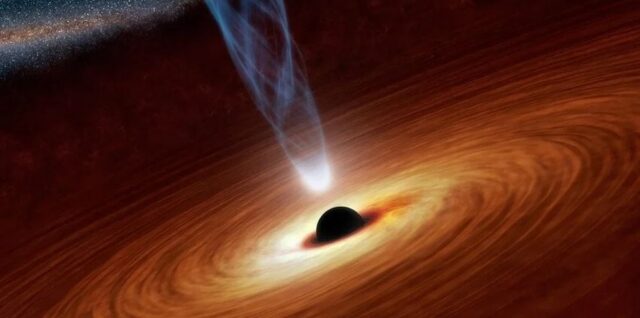
The two largest planets in our Solar System, Jupiter and Saturn, have the largest systems of moons. However, Jupiter has more large moons than Saturn, which has only one. Since both planets are gas giants, the reasons for the differences in these satellite systems have long puzzled astronomers. This motivated a collaborative team of researchers from Japan and China to develop a physically consistent model that can explain this.
NEAF 2026 returns to New York this weekend with all-star astronaut lineup and ‘world’s largest’ space expo
Thousands of enthusiasts, professionals and curious skywatchers will gather this weekend for the world’s largest and most spectacular astronomy and space expo. Continue ReadingNEAF 2026 returns to New York this weekend with all-star astronaut lineup and ‘world’s largest’ space expo
Major new telescope on Chilean summit opens window on universe
Thirty-four years after Cornell University scientists first conceived it, the Fred Young Submillimeter Telescope (FYST) now rises above the Atacama Desert, near the summit of Cerro Chajnantor in Chile. FYST will help answer some of the most important questions in astronomy, including how the universe works, the nature of dark energy and dark matter, how galaxies form and evolve and what happened in those mysterious first moments after the Big Bang.
Scientists turn ‘mess’ into breakthrough: Chaotic design unlocks next-generation optical devices
Researchers from the Monash University School of Physics and Astronomy have flipped a long-held assumption in optics, showing that deliberately introducing controlled disorder into ultra-thin optical devices can dramatically increase their power and versatility, without making them bigger or more complex.
Parachutes: A vital part of Artemis II’s trip home
NASA confident Artemis 2 heat shield will protect crew during re-entry
The Artemis 2 heat shield undergoing inspections at the Kennedy Space Center before installation on the base of the Orion capsule bringing four astronauts back to Earth Friday after a flight around the moon. The heat shield is designed to protect the craft from re-entry temperatures as high as 5,000 degrees. Image: NASA. When the Artemis 2 Orion crew capsule returns to Earth after flying around the moon, it will hit the discernible atmosphere some Continue ReadingNASA confident Artemis 2 heat shield will protect crew during re-entry
Unexpected predator: Jellyfish shown to hunt polychaete worms
It’s Not Supposed To Be Like This: A Giant Planet Orbits A Small Star
According to theory and models of planet formation, large gas giants should form around massive stars. That’s because massive stars have more massive protoplanetary disks. But astronomers have the opposite arrangement in some cases. New research highlights a massive gas giant on a close-in orbit around a low-mass M-dwarf, and it poses another challenge to our understanding planet formation.
The Artemis 2 astronauts saw a rare solar eclipse from beyond the moon. Here’s what it looked like
A newly released NASA timelapse reveals the moon crossing the sun as seen from deep space, giving the Artemis 2 crew a rare extended view of totality and the solar corona. Continue ReadingThe Artemis 2 astronauts saw a rare solar eclipse from beyond the moon. Here’s what it looked like
Why I’m hunting for Comet Pan-STARRS right now — before it’s too late
A rare long-period comet returns after 170,000 years — here’s how to find comet C/2025 R3 (Pan-STARRS) before sunrise this April, with key dates, viewing tips and the best mornings to look. Continue ReadingWhy I’m hunting for Comet Pan-STARRS right now — before it’s too late
Artemis II’s grand moon finale is almost here with a Pacific splashdown to cap NASA’s lunar comeback
‘They’re not shipping cows up to Mars’: ‘For All Mankind’ creators talk scientific accuracy and colonial inspirations behind season 5 (interview)
We chat with “For All Mankind” creators Ben Nedivi and Matt Wolbert about season 5’s dramatic arc, scientific accuracy, and real-world parallels. Continue Reading‘They’re not shipping cows up to Mars’: ‘For All Mankind’ creators talk scientific accuracy and colonial inspirations behind season 5 (interview)
ESA Launches 7 New Missions to Supercharge Space Data Transfer
Space is getting crowded – and not just with satellites, but with the massive amounts of data they’re generating. The amount of information being generated and passed through orbit is exploding. From high-resolution Earth observation images to global maritime monitoring, it’s also become a critical link in our infrastructure. But there’s another space this growing crowd of satellites is dependent on that is also filling up fast – the radio frequency spectrum. If we want to keep expanding our orbital infrastructure, we need to rethink how we move data around. On March 30, 2026, the European Space Agency (ESA) supported a series of eight CubeSats and one specialized payload on SpaceX’s Transporter-16 rideshare mission with the overarching goals of testing high-throughput laser communication, inter-satellite networking, and in-orbit artificial intelligence processing to make space data transfer faster, more secure, and vastly more efficient.
NASA took this camera gear to space aboard Artemis 2, and you can own it, too!
Artemis 2 is the first manned lunar mission in over 50 years, but the cameras onboard are surprisingly down-to-earth. Here’s how to get your hands on the gear that has brought us so many stunning shots of space. Continue ReadingNASA took this camera gear to space aboard Artemis 2, and you can own it, too!
Artemis 2 spies a crescent Earth above the moon’s horizon | Space photo of the day for April 10, 2026
Earth shines above the lunar horizon in a new Artemis 2 photo. Continue ReadingArtemis 2 spies a crescent Earth above the moon’s horizon | Space photo of the day for April 10, 2026