NASA’s Curiosity and Perseverance rovers have spotted a bizarre assortment of Martian oddities, from potato chip-like rocks and ghostly white formations to mysterious patterns etched into the Red Planet’s surface.
While their appearances may be unusual, these formations offer scientists something far more valuable than a collection of curious snapshots: clues to the geological processes that shaped Mars over billions of years.
In particular, the rocks and mineral deposits could help researchers piece together the planet’s watery past and identify environments that may once have been capable of supporting microbial life.
NASA’s Curiosity rover recently wrapped up a drilling campaign at a location nicknamed “Nazca,” where scientists have been examining unusual disk-shaped crystal formations embedded in the surrounding bedrock. Some of the features are so thin and flat that the mission team likened them to potato chips, according to a statement from the space agency.
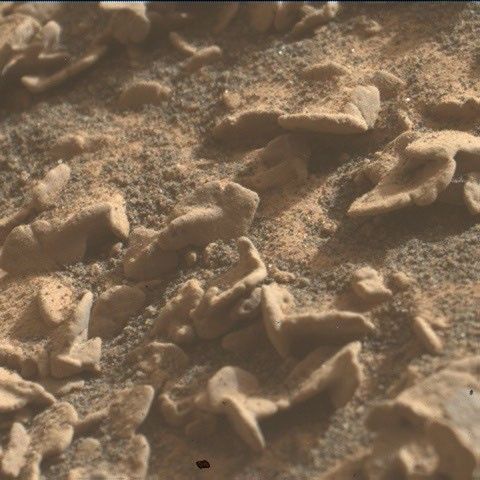
Curiosity used its Mars Hand Lens Imager (MAHLI), mounted on the end of its robotic arm, to capture detailed close-up images of the formations on Nov. 7 — the rover’s 5,067th Martian day, or Sol 5067. The rover also used its ChemCam instrument to study the rocks’ chemical composition, while samples from the Nazca drill site were delivered to its onboard Sample Analysis at Mars (SAM) instrument for further analysis.
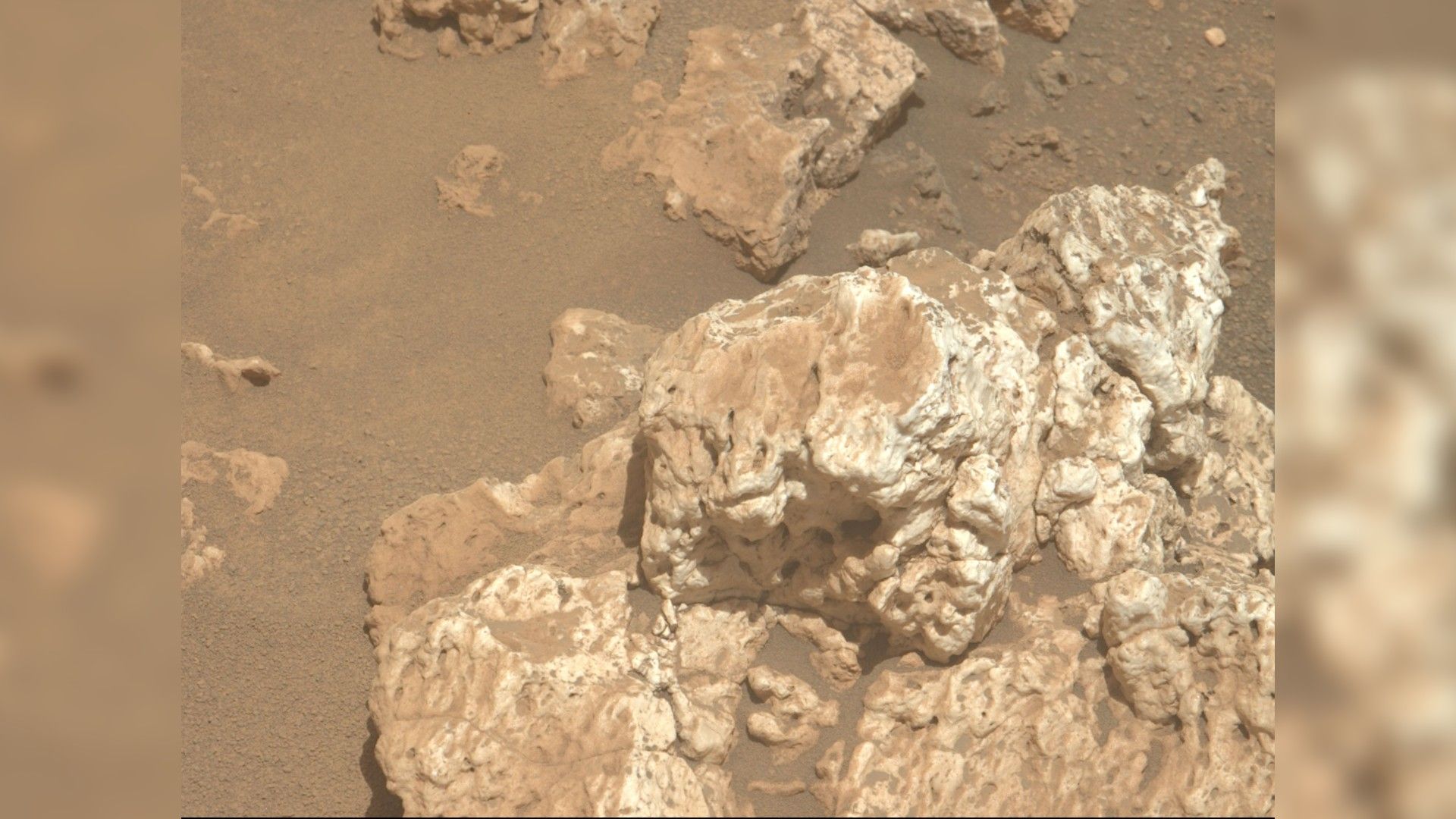
Meanwhile, NASA’s Perseverance rover has been investigating a collection of unusually bright rocks in an area called “Idubi,” located in the “Lac de Charmes” region outside Jezero Crater. The rover captured images of the formations on Oct. 29, 2026 (Sol 2023), revealing pale, ghostly-looking rocks that stand out dramatically against the darker, dust-covered Martian landscape.
Data from Perseverance’s SuperCam instrument revealed that the rocks are rich in hydrated silica rather than being typical igneous rocks. That discovery has scientists particularly interested. On Earth, hydrated silica can form in environments involving hydrothermal activity or groundwater. These deposits are also capable of preserving microscopic fossils, making them valuable targets in the search for evidence of ancient life, according to another statement from NASA.
Perseverance is now conducting a closer investigation of the formations, using its instruments to gather detailed chemical and mineralogical data that could help scientists determine how the rocks formed and whether they preserve potential signs of past microbial activity.
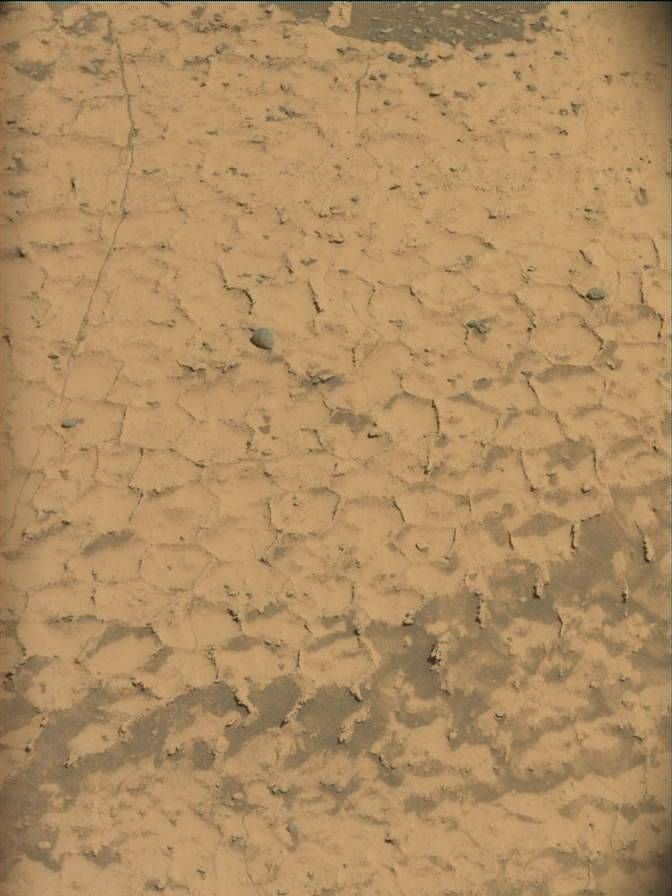
Back at Mount Sharp, Curiosity has also spotted another geological curiosity: the return of distinctive polygon-shaped patterns across the Martian bedrock.
The rover’s latest images, captured on Nov. 13, 2026 (Sol 5073), show small, regularly shaped polygons outlined by raised ridges, resembling patterns the rover encountered earlier in its climb up the layered mountain, whose rocky slopes preserve a record of Mars’ changing climate and ancient watery environments. Scientists say these formations could have developed through several processes, including mineral shrinkage as water evaporated, temperature changes or the expansion and compaction of buried sediments, according to a statement from NASA.
By studying the composition of the rocks and the material cementing the raised ridges around the polygons, researchers hope to determine which processes shaped the terrain.
Together, these discoveries highlight how much Mars’ seemingly barren landscape can reveal about its past. As Curiosity continues climbing Mount Sharp and Perseverance investigates ancient terrain beyond Jezero Crater, both rovers are helping piece together the planet’s unique features and complex geological history.
About the Author