Two European Earth-observing spacecraft lifted off from South America tonight (Sept. 14).
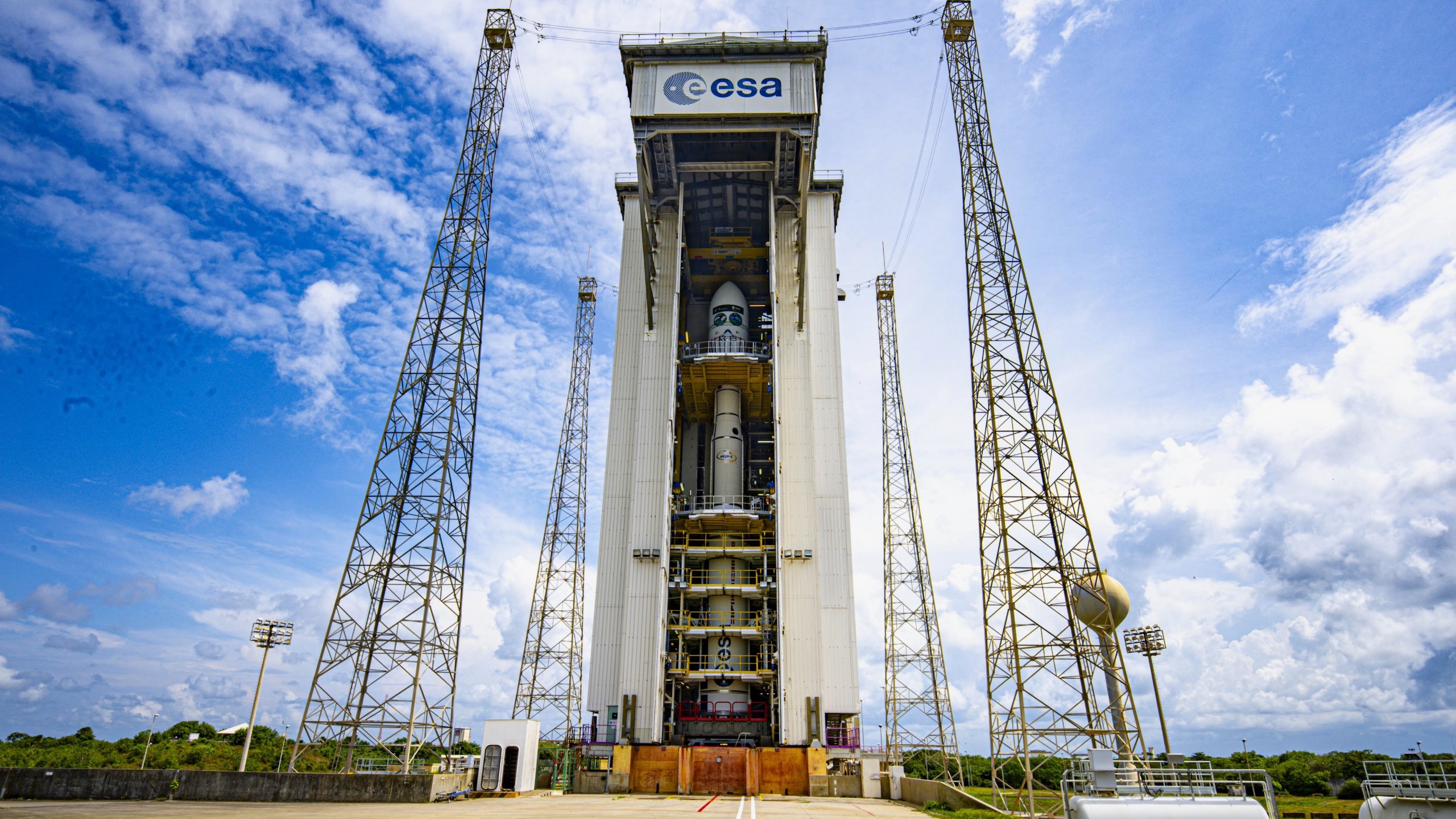
A Vega C rocket carrying the FLEX and Copernicus-3C satellites launched from Europe’s Spaceport in Kourou, French Guiana at 9:21 p.m. EDT (10:21 p.m. local time in Kourou and 0121 GMT on Sept. 15).
Both FLEX and Sentinel-3C are scheduled to be deployed at an altitude of about 509 miles (820 kilometers). The two satellites will be flying freely by 116 minutes after launch, if all goes to plan.
The 875-pound (397-kilogram) FLEX will detect and monitor vegetation fluorescence, which explains its name (a shortening of “Fluorescence Explorer”). By doing so, it will map plant photosynthetic activity — something no satellite can do at the moment, according to ESA.
FLEX’s data will be important not only “for a better understanding of the global carbon cycle, but also for agricultural management and food security,” ESA wrote in a FLEX mission desription. “This is of particular relevance due to demand the growing world population is placing on the production of food.”
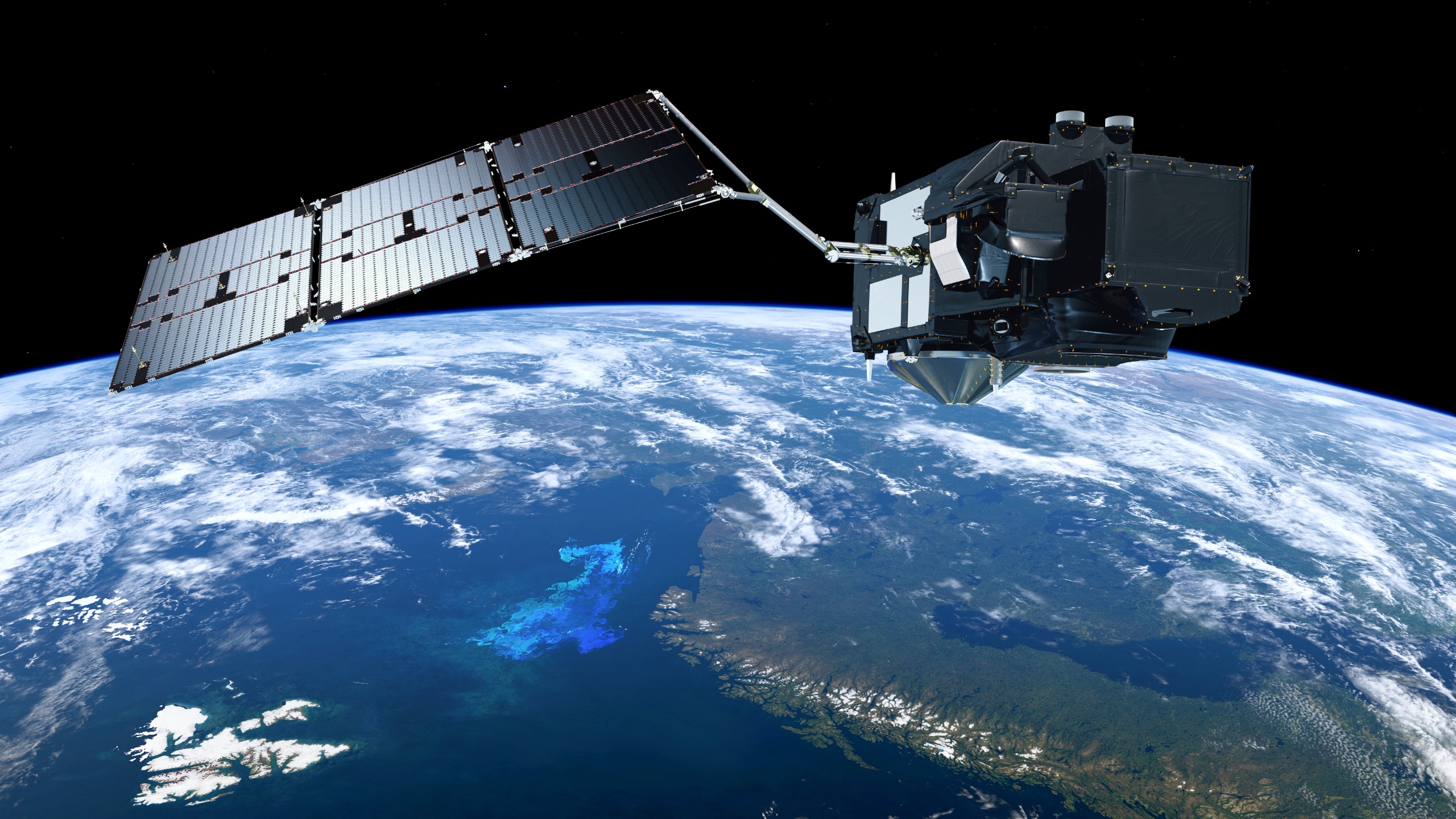
Sentinel-3C is part of the European Union’s Copernicus Earth-observation program. The 2,520-pound (1,1143-kg) satellite will continue the Sentinel-3 line, which is aging but still going strong in low Earth orbit; Sentinel-3A and Sentinel-3B, which launched in 2016 and 2018, respectively, remain active.
“Like its two older siblings in orbit, Sentinel-3C carries a suite of cutting-edge instruments that measure systematically Earth’s oceans, land, ice and atmosphere to monitor and understand large-scale global dynamics,” ESA wrote in a Sentinel-3C description. “It provides essential information in near-real time for ocean and weather forecasting.”
The 115-foot-tall (35-meter-tall) Vega C debuted in July 2022 and had seven flights under its belt before today, six of them successful.
The rocket was developed by the European Space Agency and originally operated by the France-based company Arianespace. The Italian outfit Avio now runs the vehicle’s liftoffs, however; today’s launch was the second Avio has managed.
Editor’s note: This story was updated at 9:35 p.m. ET with news of successful liftoff.
About the Author