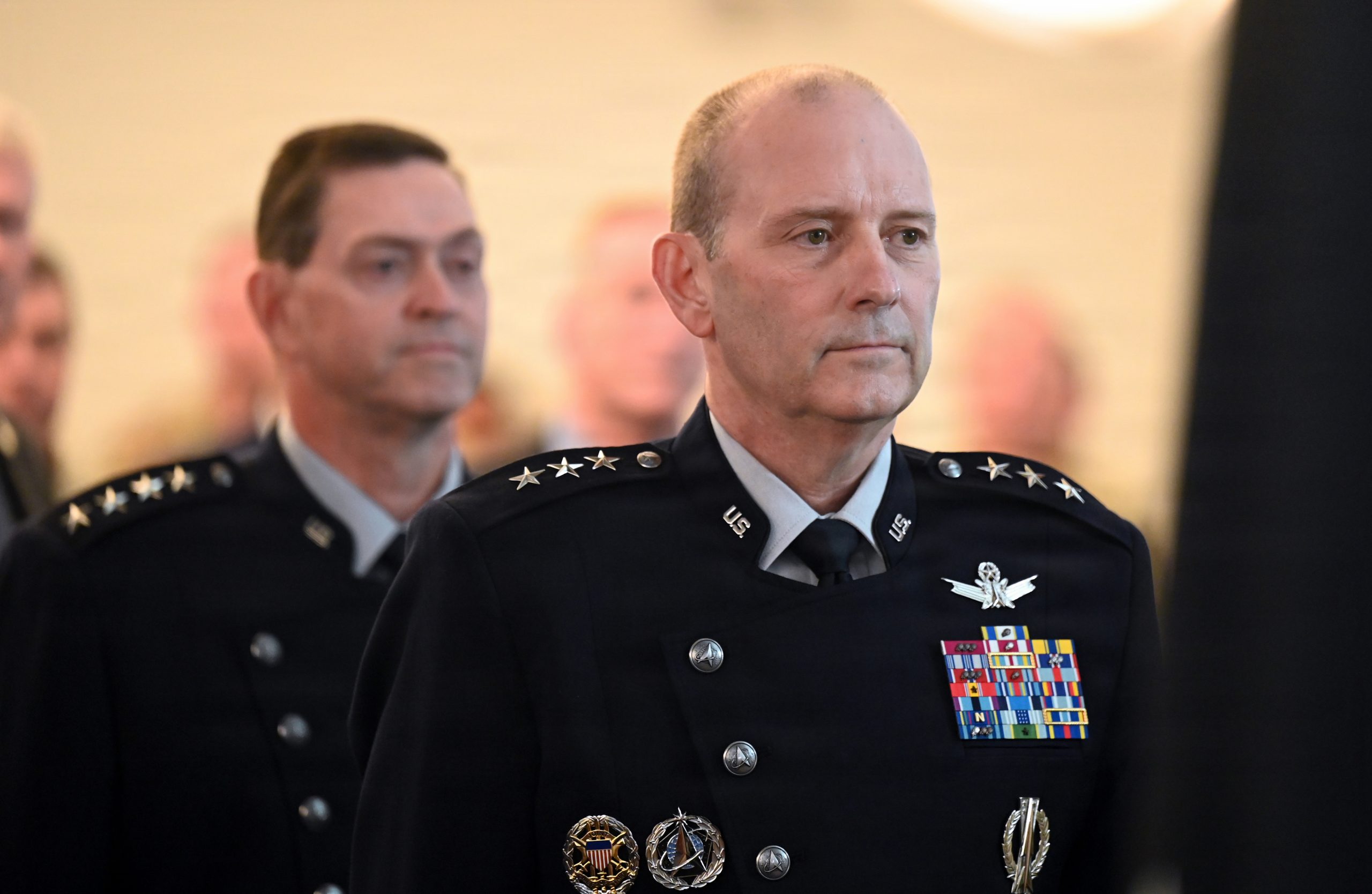
WASHINGTON — Gen. Douglas Schiess took over as the U.S. Space Force’s third chief of space operations on Sept. 3, succeeding Gen. Chance Saltzman at a ceremony at Joint Base Andrews, Maryland.
Schiess takes charge as the service enters a larger procurement and force expansion cycle, with rising demands for new satellites, weapons, personnel and closer integration with the rest of the U.S. military.
In his first message to the force Schiess portrayed his tenure as the next stage in the development of the Space Force, which was established in 2019 and has been moving from its initial focus on building a new military service toward preparing forces for combat.
He credited Gen. John Raymond, the first chief of space operations, with establishing the service and Saltzman with “cementing our warfighting foundation.”
The next phase, Schiess said, will require the Space Force to expand while improving how it develops, tests and operates new systems.
“Integrating into the Joint Force demands a rapid scaling of both our manpower and space capabilities,” Schiess wrote. “We must grow with intention, leveraging our industry partnerships to advance our weapon systems and the way we fight.”
Schiess comes to the job from the operational side of the service. He most recently served as deputy chief of space operations for operations, overseeing policy for global operations, training and readiness. Before that, he commanded U.S. Space Forces-Space, the Space Force component responsible for providing forces to U.S. Space Command.
His comments at the change-of-command ceremony signaled continuity with Saltzman, who during his tenure put greater emphasis on preparing guardians for warfare in space and on developing capabilities to protect U.S. satellites and counter adversaries’ use of space systems.
Schiess said recent military operations demonstrated the importance of space capabilities to the broader U.S. military, but added that the service still has work to do.
The Space Force must develop more advanced concepts for warfare, push training and testing beyond current practices and deepen integration with U.S. allies and partners, he said.
About the Author