Skip to content
cropped-file_000000006f5071f8aedc20be6316bf97.png

Astronomy • Exploration • Strategy

Primary Menu
  • Home
  • Podcast
  • Infographics
  • About
  • Contact
Light/Dark Button
Subscribe
  • Home
  • Space.com
  • On this day in space! Aug. 21, 1914: Total solar eclipse expedition crashed by WWI
  • Space.com

On this day in space! Aug. 21, 1914: Total solar eclipse expedition crashed by WWI

On Aug. 21, 1914, a total solar eclipse temporarily darkened skies across Europe and Asia. A young German astronomer and friend of Albert Einstein's, Erwin Finlay-Freundlich, led an expedition to the Crimean Peninsula of Russia, where he hoped to record observations that would verify Albert Einstein's general relativity theory.This theory predicted that the light from distant stars appearing very close to the sun's edge should shift due to the curvature of space. Those stars would
Astrobitica 21/08/2026 (Last updated: 21/08/2026) 2 minutes read
[Aggregator] Downloaded image for imported item #67057

On Aug. 21, 1914, a total solar eclipse temporarily darkened skies across Europe and Asia. A young German astronomer and friend of Albert Einstein’s, Erwin Finlay-Freundlich, led an expedition to the Crimean Peninsula of Russia, where he hoped to record observations that would verify Albert Einstein’s general relativity theory.

This theory predicted that the light from distant stars appearing very close to the sun‘s edge should shift due to the curvature of space. Those stars would only be visible during a total solar eclipse, when the moon blocks out the sun’s bright light. Unfortunately, the start of World War I just 20 days before the eclipse foiled the expedition. After Germany declared war on Russia, Freundlich and his colleagues were captured by the Russian army and their equipment was confiscated.

After the war, a solar eclipse on May 29, 1919 was used to confirm Einstein’s theory of general relativity, so the experiment was ultimately a success.

A black circle against a black background surrounded by white wispy tendrils

The 2026 total solar eclipse. (Image credit: NASA/Keegan Barber)

Why it mattered

Today, Einstein’s general relativity theory is a given. This theory is firmly cemented in our modern understanding of how the universe works (not counting fringe conspiracists). But looking back just over 100 years, it is interesting to see how hard scientists had to work to gather evidence to validate this theory and consider the way war and geopolitics played a part in postponing this work.

Scientists continue to validate the theory to this day through a variety of methods and observations, though a modern trek to witness a total solar eclipse would be a lot easier than it would have been in 1914.


You may like

This expedition, or rather the planned expedition, took place well over 100 years ago. Whether for the purposes of trying to validate Einstein’s general theory of relativity or just for fun, people have experienced eclipses for as long as we can date back.

a spacecraft consisting of a large round radar dish, three long pole-like appendages extending from an octagonal body, floating in space on a starry background

On this day in space! Aug. 20, 1977: Voyager 2 launches to the outer planets

It’s fascinating to look at the parallels between this planned expedition over 100 years ago and the treks that people around the world (including Space.com reporters) take in modern times to see a total solar eclipse. For example, during the 2026 total solar eclipse, people flocked from all over to locations like Spain and Iceland to experience the eclipse far from home.

Space

About the Author

Astrobitica

Administrator

Visit Website View All Posts

This post was originally published on this site

Post navigation

Previous: The COSMOSIS framework can ensure that Washington governs space with its complexity in mind.
Next: Ancient stars dazzle in a celestial chandelier | Space photo of the day for Aug. 21, 2026

Related Stories

fire erupts from below a giant chrome cylinder with three grid fins, next to a tower.
  • Space.com

SpaceX ignites giant Super Heavy booster engines ahead of daring Starship launch (video)

Astrobitica 26/10/2026 0
A swirling deep space nebula vista reveals pockets of pale blue glowing gas surrounded by reddish-orange clouds peppered with stars.
  • Space.com

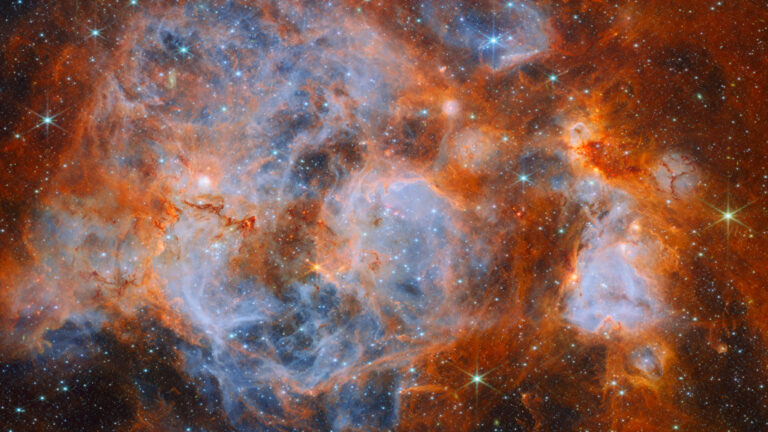
Glowing ‘cauldron’ of new stars | Space photo of the day for Oct. 26, 2026

Astrobitica 26/10/2026 0
Wz2zqxutkvgmc4wyrujkh4 1920 80
  • Space.com

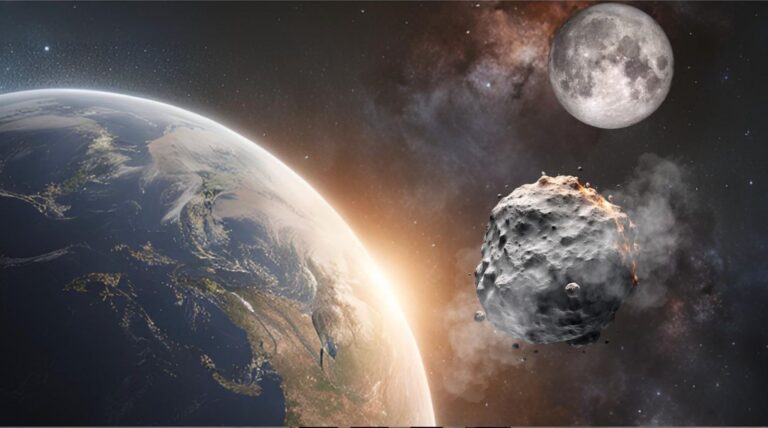
Rubin telescope should find more of Earth’s mysterious ‘mini-moons’ — including some we can study up close

Astrobitica 26/10/2026 0

Download the Astrobitica Night Sky Guide for FREE!

Copyright © 2026 All rights reserved. | ReviewNews by AF themes.