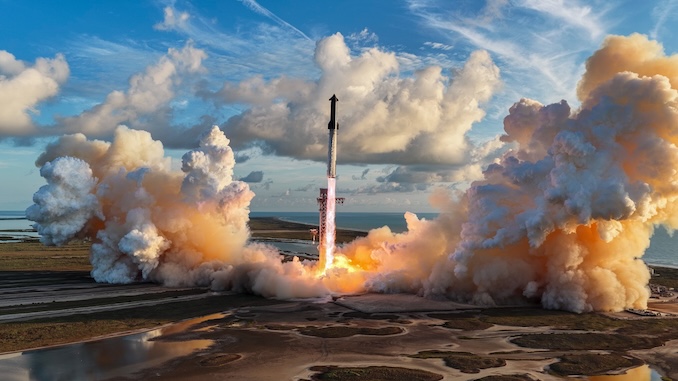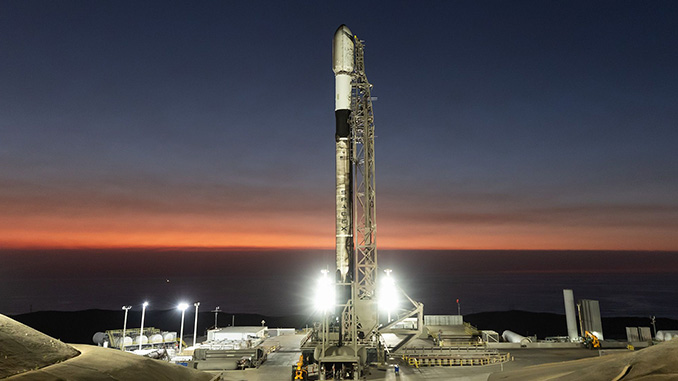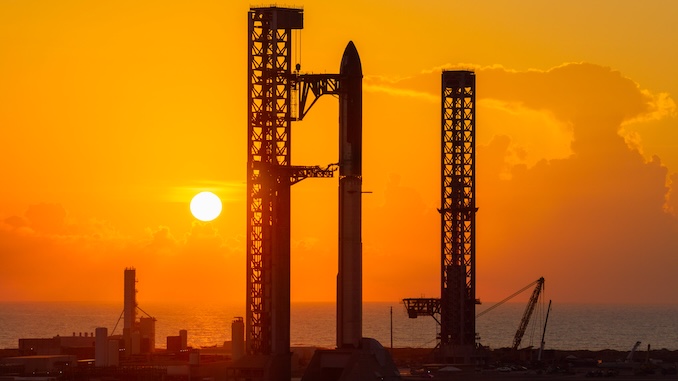
SpaceX is poised to send its Starship-Super Heavy rocket to orbit for the first time in program history on Monday, Sept. 28. The orbital launch attempt of the 124-meter-tall (407 ft) rocket comes 18 years after the company’s first launcher, the Falcon 1, reached orbit for the first time.
The mid-morning mission is the 14th launch of the integrated Starship-Super Heavy rocket. Each of the previous 13 flights were intentionally flown on sub-orbital trajectories.
SpaceX will monitor the health of the rocket during its ascent and first coast phase. If all goes well, about 25 minutes after liftoff, the Ship 41 upper stage will reignite one of its three sea-level Raptor engines to raise and circularize the vehicle’s trajectory to place it into orbit.
Liftoff of the mission, dubbed Starlink 31-1, is scheduled during a 75-minute window that opens at 7:15 a.m. CDT (8:15 a.m. EDT / 1215 UTC).
Spaceflight Now will have live coverage beginning about two hours prior to liftoff. We’ll be joined by multiple guest experts throughout the broadcast.
The mission will be launched using the first stage Super Heavy booster, tail number B21, and the Starship upper stage, tail number S41. SpaceX will not attempt to recover either stage.
If SpaceX opts not to go for the orbital insertion burn, the rocket will follow a similar suborbital trajectory as with previous missions. But if they do perform that insertion burn, the plan is to start deploying the 26 Starlink Version 3 satellites onboard about 34 minutes after liftoff.
The deployment sequence will be about 30 minutes in duration. The satellites will be released from S41 in roughly one-minute increments.
SpaceX previously said it could fly up to 60 Starlink V3 satellites in future missions, but it chose to fly just 26 this first time around. Three of the satellites include extra imaging capabilities and will capture video of the Ship’s heat shield tiles.
[embedded content]
With this being the first orbital flight of Starship, SpaceX plans to send it around the Earth about six times before a planned splashdown off the western coast of South America. The 11-second deorbit burn is planned to happen nearly nine hours after liftoff.
That will set up a planned, controlled splashdown roughly an hour later. SpaceX said depending on the outcome of this flight, they may attempt to catch the next Starship upper stage during the 15th flight test of the program.
About the Author