
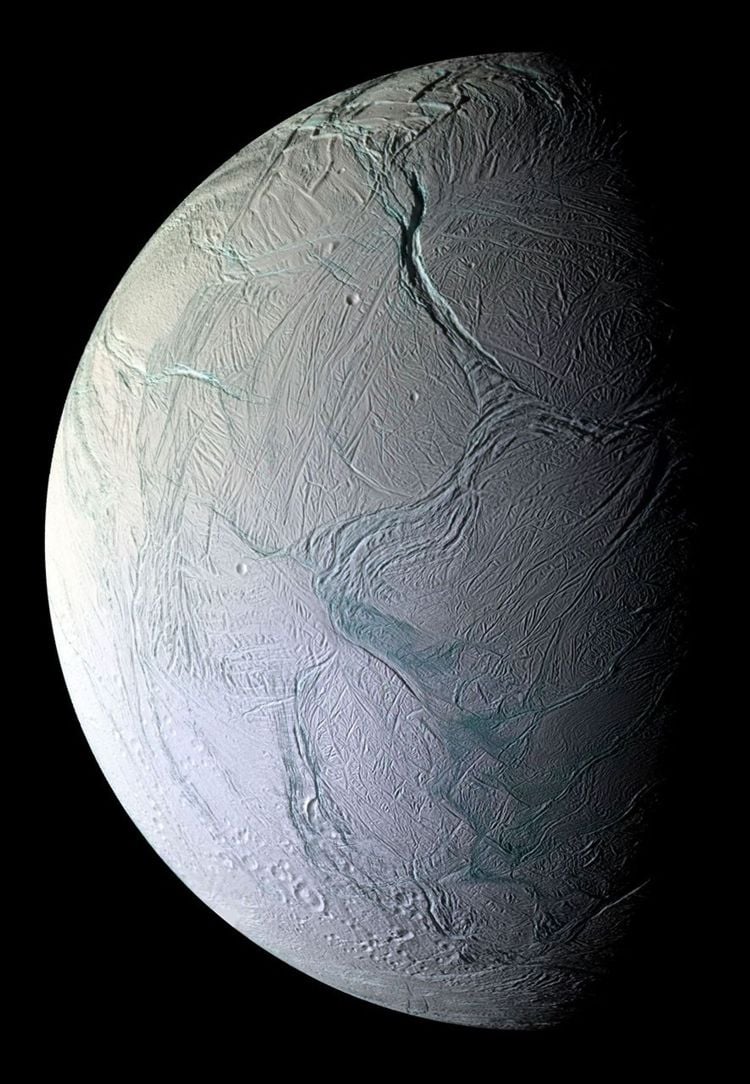
Saturn’s moon, Enceladus, has become a prime target for astrobiologists due to its vast subsurface ocean beneath its icy crust. The geysers at Enceladus’ south pole discharge bits of this ocean, offering opportunities for scientific research into the potential for life on the moon.
Saturn’s moon, Enceladus, has become a prime solar system target for astrobiologists. This is because the small moon, which is just over 10 percent the diameter of Earth’s Moon, harbors a vast subsurface ocean beneath its icy crust. This subsurface ocean combined with the geysers at Enceladus’ south pole that discharges bits of this ocean into the void provides scientists with a treasure trove of opportunities for scientific research into whether Enceladus could harbor ingredients for life as we know it, or even direct evidence for life.
About the Author

Source: Universe Today