Blue Origin’s big rocket is getting a little bigger.
Jeff Bezos’ company announced today (Nov. 5) that it has developed a third stage for its New Glenn rocket, which it says will make the powerful launcher more capable and flexible.
The stage, called the GS3, “enhances New Glenn’s capabilities,” Blue Origin said in a blog post today. “The third stage enables direct deployment of satellite constellations to GEO [geostationary orbit] and supports heavy-lift science and exploration missions to the moon and deep space.”
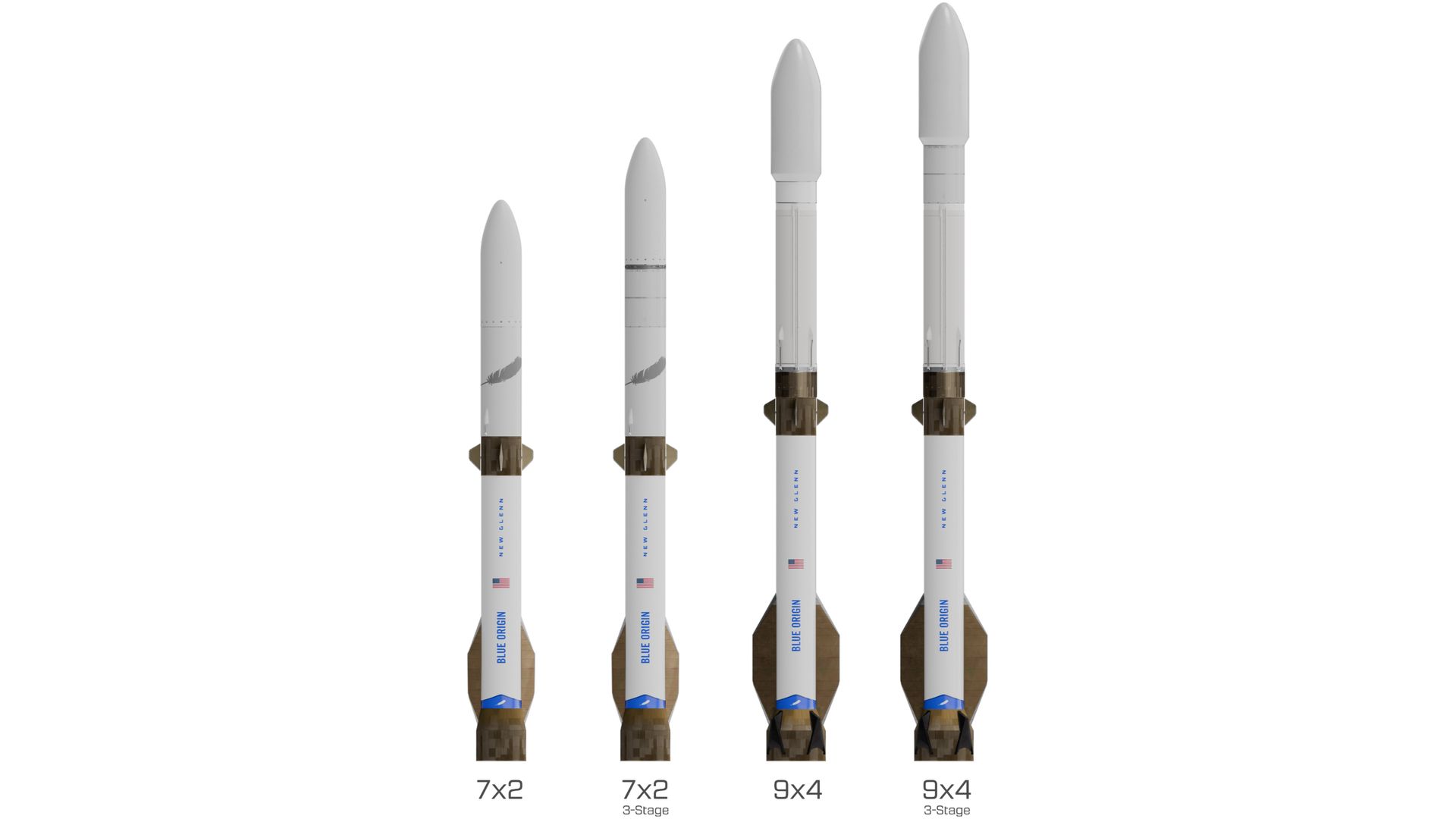
New Glenn is a two-stage vehicle at the moment. Its reusable first stage is powered by seven of Blue Origin’s BE-4 engines, and its second stage features two of the company’s BE-3Us. The rocket stands 322 feet (98 meters) tall and can haul 14.3 tons (13 metric tons) to geostationary transfer orbit (GTO) and 50 tons (45 metric tons) to low Earth orbit (LEO).
These are the specs for the standard, or “7×2,” version of New Glenn. Last year, Blue Origin announced that it’s developing a super-heavy variant known as the 9×4, because it will feature nine first-stage BE-4s and four upper-stage BE-3Us. The 9×4 will be nearly 400 feet (122 m) tall, and it will be able to loft 15.4 tons (14 metric tons) to GTO and 77 tons (70 metric tons) to LEO, according to Blue Origin.
New Glenn has flown three times to date, each time in the 7×2 configuration. The rocket debuted in January 2025, then launched again in November 2025 and again on April 19 of this year.
Things didn’t go according to plan on that latest mission. The rocket deployed AST SpaceMobile’s BlueBird 7 communications satellite into the wrong orbit, and the spacecraft ended up being lost.
Another setback came just a month later: On May 28, New Glenn exploded on the pad during a routine engine test at Florida’s Cape Canaveral Space Force Station. Blue Origin has been working ever since to rebuild the pad and get New Glenn ready for its fourth flight, which is expected to occur late this year.
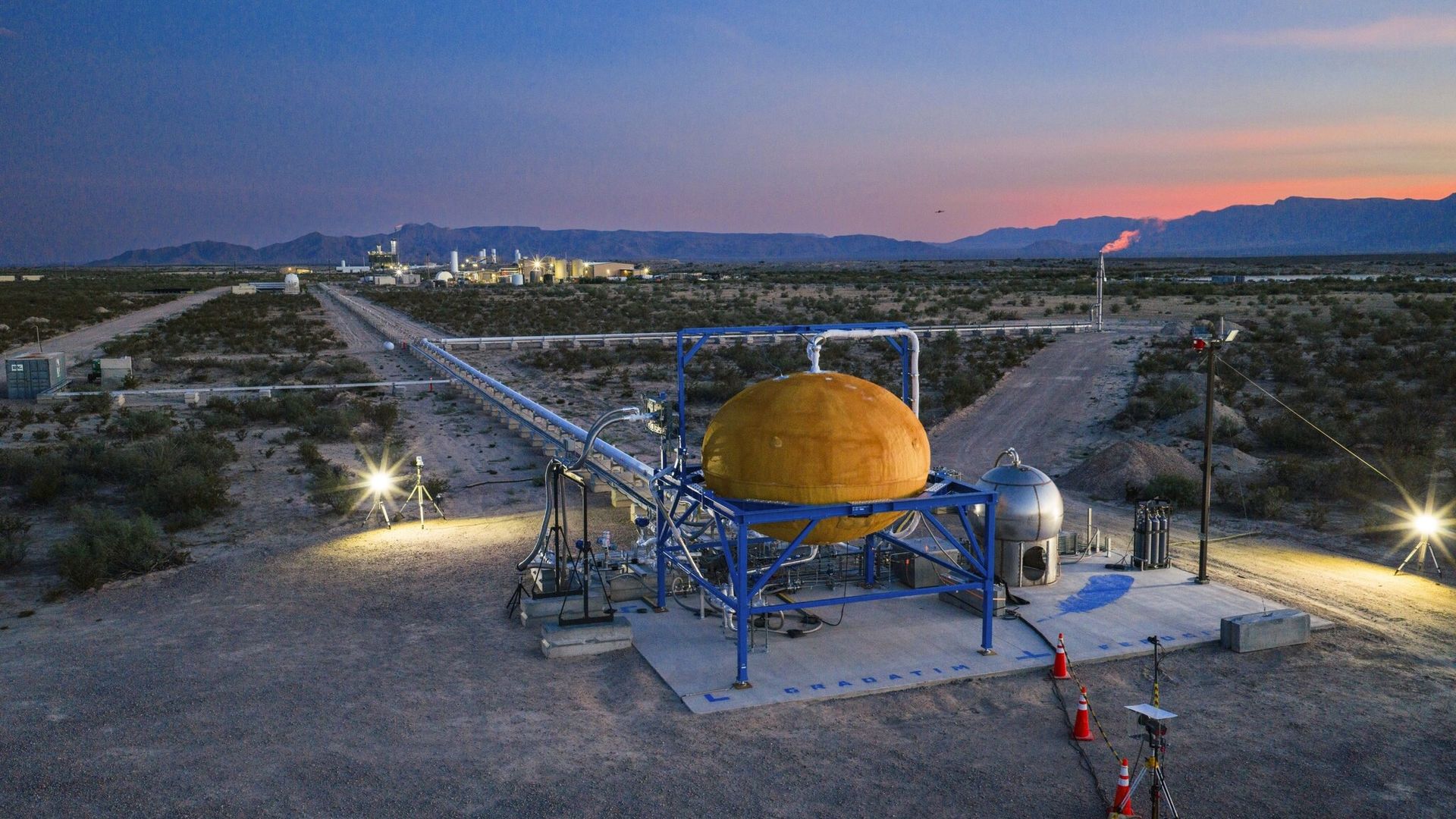
We now know that Blue Origin has also been working on the GS3 while those repairs were underway. The new stage will be powered by one BE-7 engine, which the company developed for use on its Blue Moon spacecraft, one of the two private vehicles that NASA selected to be crewed lunar landers for its Artemis program. (The other is SpaceX’s Starship.)
Blue Moon landing missions won’t need to launch on GS3-equipped New Glenn rockets, according to Blue Origin. But the third stage “can support sustained operations around the moon,” the company wrote in today’s blog post. “By delivering significant payload mass directly to trans-lunar injection (TLI), GS3 enables faster transit times while preserving propellant for on-orbit operations.”
And there’s already demand for such services: Blue Origin also announced today that a government customer (which it did not name) has booked a GS3 mission to cislunar (Earth-moon) space, with launch targeted for 2028.
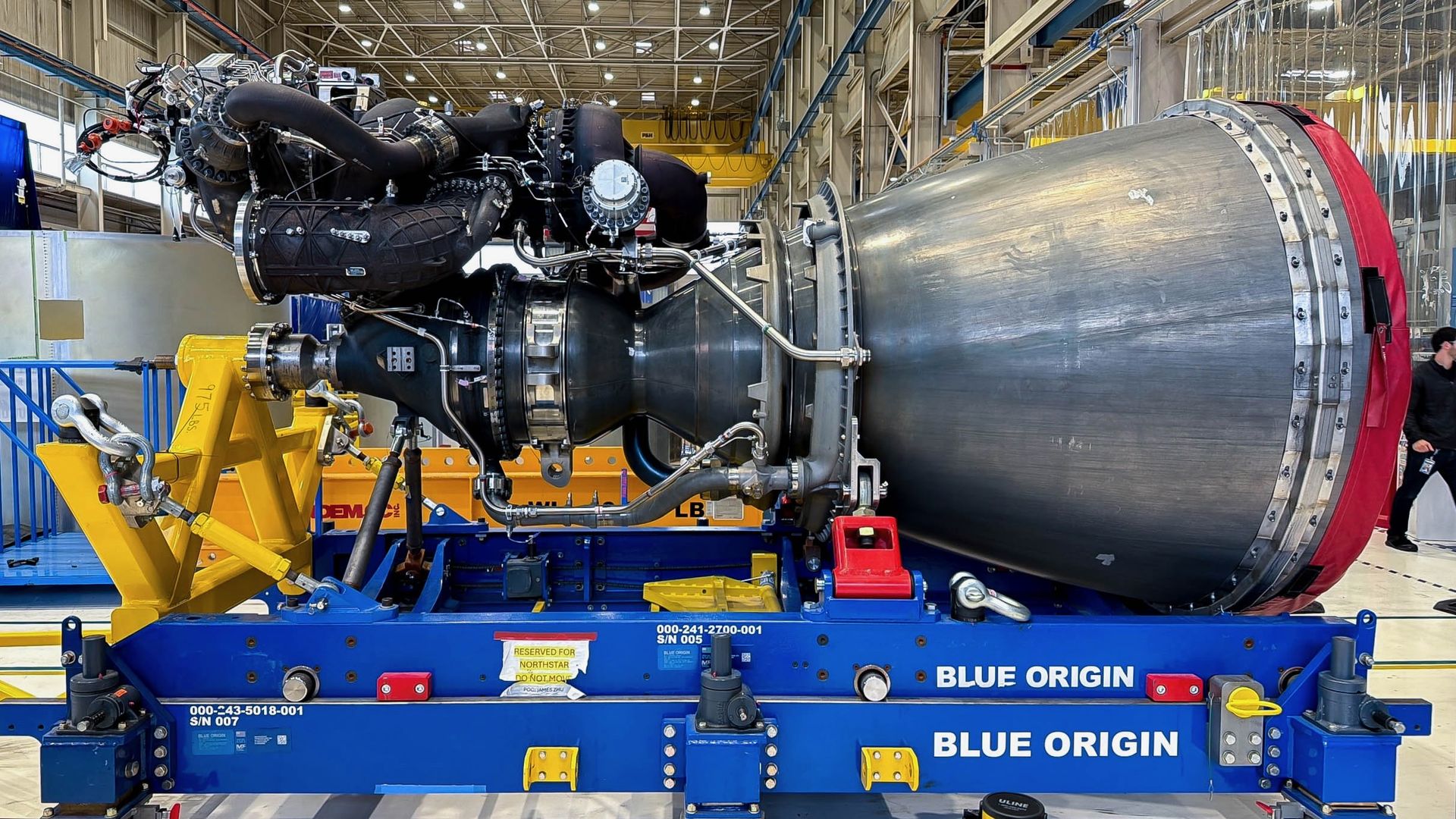
And the company dropped yet more news today — that it’s working on a new first-stage engine, called Northstar.
Like Blue Origin’s other booster engine, the BE-4, Northstar burns liquid oxygen and liquid methane propellant, a combination known as methalox. But the new engine is more powerful and less complex.
“Compared to the BE-4 engine, Northstar reduces mass by 30% and parts count by 50%, while increasing thrust from 640,000 to 715,000 pounds-force,” Blue Origin said in a second blog post today. “Manufacturing advancements have also significantly shortened production timelines, enabling assembly in less than a day.”
Northstar went from program approval to development testing in just 11 months, according to the company. But today’s update did not say when the new engine will fly for the first time.
About the Author