
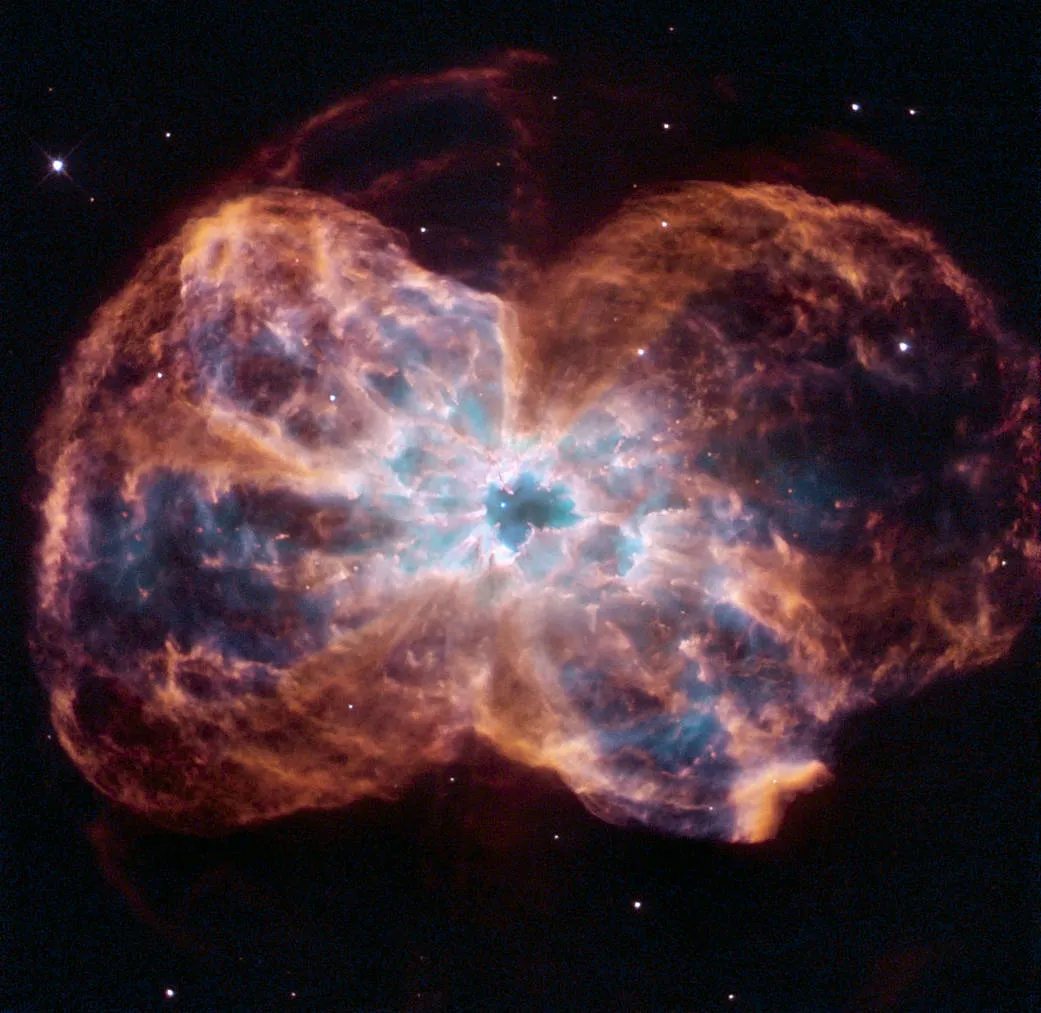
When stars like the Sun end their lives, they do not simply shed their outer layers to leave a white dwarf; a new model suggests that dying stars eject mass asymmetrically, resulting in a series of bursts that propel the star through space over time. This movement helps explain why wide binary star systems often disband once one star becomes a white dwarf and suggests the possibility of more dramatic phenomena awaiting confirmation.
When stars like the Sun reach the end of their lives, the textbook story has them puffing up and quietly shedding their outer layers to leave a white dwarf behind. A new model suggests it is far less serene than that. As dying stars eject mass asymmetrically, each burst delivers a tiny recoil, and over hundreds of thousands of years roughly ten thousand of these kicks add up to send the star drifting through space at a respectable speed. The idea neatly explains why wide binary star systems tend to fall apart once one star becomes a white dwarf, and it hints at something more dramatic still waiting to be confirmed
About the Author

Source: Universe Today