Live launch coverage and running updates from the Spaceflight Now team. Between broadcasts, Launch Pad Live streams 24/7 from Cape Canaveral.
- Leadership from NASA, Northrop Grumman and SpaceX are preparing to hold a teleconference to provide the latest information regarding the planned launch of a Cygnus cargo spacecraft to the International Space Station. Liftoff is scheduled for no earlier than Sunday, November 29.
- Opening remarks begin with Gaurang Patel, operations integration manager, NASA’s Low Earth Orbit Program. He says they are not tracking any issues with the spacecraft or launch vehicle, but said they are tracking the weather. Patel notes that several members of the team have been impacted by the heavy flooding seen in recent days in Brevard County.
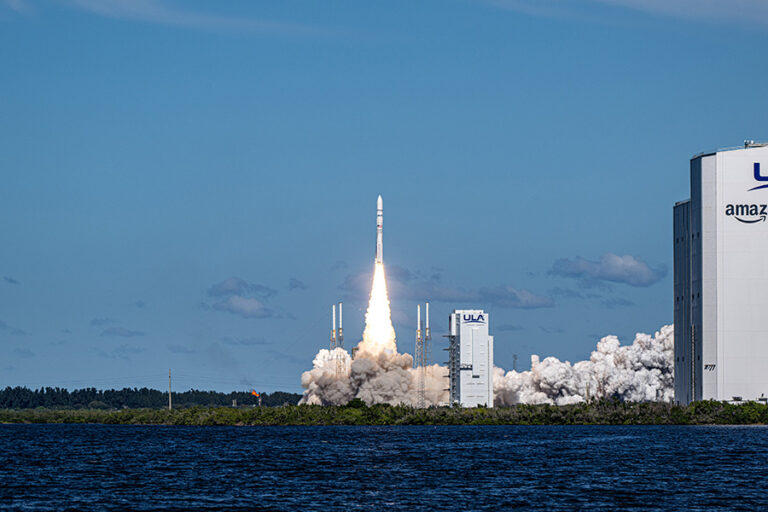
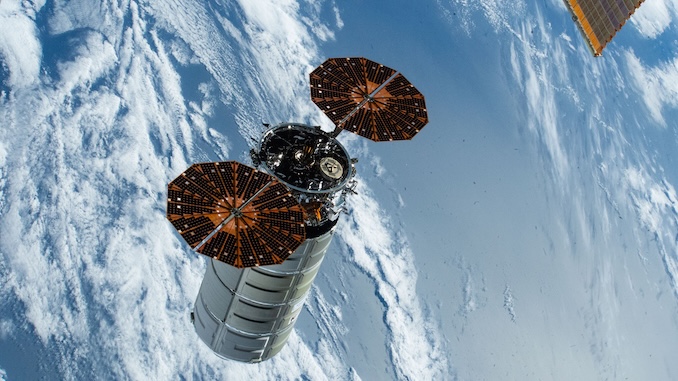
- Following liftoff of SpaceX’s Falcon 9 rocket from Space Launch Complex 40 at Cape Canaveral Space Force Station (scheduled for 10:47 a.m. EST / 1547 UTC on Nov. 29), the Northrop Grumman Cygnus XL spacecraft is slated to dock with the ISS two days later on Tuesday, Dec. 1, at 2:35 a.m. EST (0735 UTC).
- NASA astronauts Jessica Watkins and Luke Delaney will be monitoring the arrival of Cygnus and will use the Canadarm to capture and berth the vehicle to the Unity module.
- Patel says the Cygnus spacecraft is loaded with about 11,000 pounds of cargo, science, and hardware. Some of which includes fresh food, hatch seal covers, and some spacewalk tools for upcoming EVAs.
- Jennifer Buchli, chief scientist, NASA’s Low Earth Orbit Program, says some of the science heading up to the space station include a follow-up experiment first flown during Expedition 65 to study muscle loss. Another will study a nanomedicine for cancer and osteoarthritis.
- Dave Schiller, vice president, civil space and sciences, Northrop Grumman, begins his remarks noting that the Cygnus vehicle has been flying to the ISS since its demo mission in 2013 and the first operational mission in 2014. To date, Cygnus spacecraft have delivered more than 169,000 pounds of science and supplies to the ISS.
- Schiller says if NASA requests this, this Cygnus spacecraft may perform one or more reboosts of the ISS.
- In keeping with the Cygnus tradition, this spacecraft is named for a pioneer in human spaceflight. This vehicle is named S.S. James ‘Jim’ Lovell.
- Jared Metter, director, flight reliability, SpaceX, notes that NG-25 is the third cargo mission to the space station for SpaceX. The Cargo Dragon spacecraft supporting the CRS-35 mission just splashed down off the coast of California over the weekend.
- Metter notes that the booster flying this mission is B1096.9, which will perform a return to launch site landing at Landing Zone 40.
- Regarding the development and readiness of the Antares 330 rocket to launch Cygnus vehicles, Schiller doesn’t commit to a readiness date, but says “We will share any additional details about availability as they become available.”
- Schiller says there is one remaining Falcon 9 available for Cygnus and says, “we will always work dynamically with NASA and others to identify launch vehicle opportunities as we assess the readiness of the launch vehicle market. So we continually plan forward and we do not anticipate a gap in any of the launch provider launch manifests for Cygnus.”
- Schiller, asked about the status of the NG-22 spacecraft, says repairs are still ongoing and they intend to fly it in the future, but doesn’t offer a timeline for when that might happen.
- Regarding the status of Northrop Grumman’s Lunar Infrastructure Demo (LID) missions, which are a repurposing of former Gateway hardware, Schiller says that the first of those is planned to launch to the Moon at the end of 2027. The two subsequent LID missions will fly at the ends of 2028 and 2029.
- This concludes the briefing.
About the Author