
We didn’t exactly go bananas for Tim Burton’s odd take on “Planet of the Apes” back in 2001, but now, on the occasion of the sci-fi film’s 25th anniversary, we’ve had time to reflect on not only the summertime spectacle’s notable missteps, but also its unsung merits.
Invading the hallowed grounds of director Franklin Schaffner’s 1968 original “Planet of the Apes“ was risky business at best, but 20th Century Fox rolled the dice with their long-gestating $100 million remake and a competent cast that included Mark “Markie Mark” Wahlberg, Tim Roth, Helena Bonham Carter, Michael Clarke Duncan, Paul Giamatti, David Warner, and the lovely Lisa Marie.
The studio no doubt hoped a modern makeover of one of the most respected science fiction films ever would reignite interest in the franchise and spawn a bunch of sequels similar to what Schaffner’s Charlton Heston-starring classic did.
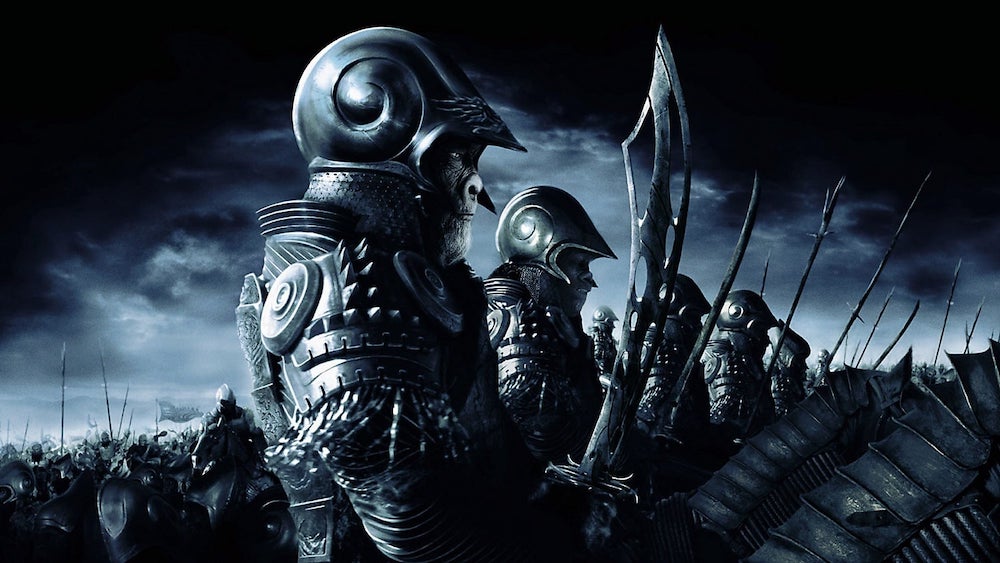
Instead, “Planet of the Apes” swiftly killed that notion with its poor critical response despite a respectable box office haul of $362 million after it was released to awful reviews on July 27, 2001. That ended any lofty dreams of triumphantly resurrecting Ape mania for another decade, until director Matt Reeves rebooted everything once more in 2011 with “Rise of the Planet of the Apes.”
Treading upon sacred cinematic territory was a brash move, one even considered by filmmakers like Peter Jackson, Oliver Stone, Chris Columbus, and James Cameron at one point.
But Tim Burton was anything but timid, and he prematurely plunged into his “Planet of the Apes” project with unbridled enthusiasm. The aftermath was a strange mix of superficial camp and chaotic action that doesn’t really add up to anything of interest, and it remains a curious addition to Burton’s incredible 40-year filmography.
So, let’s peel back the polarizing “Planet of the Apes” to find some of the sweet and sour!
Rick Baker’s Fantastic Makeup
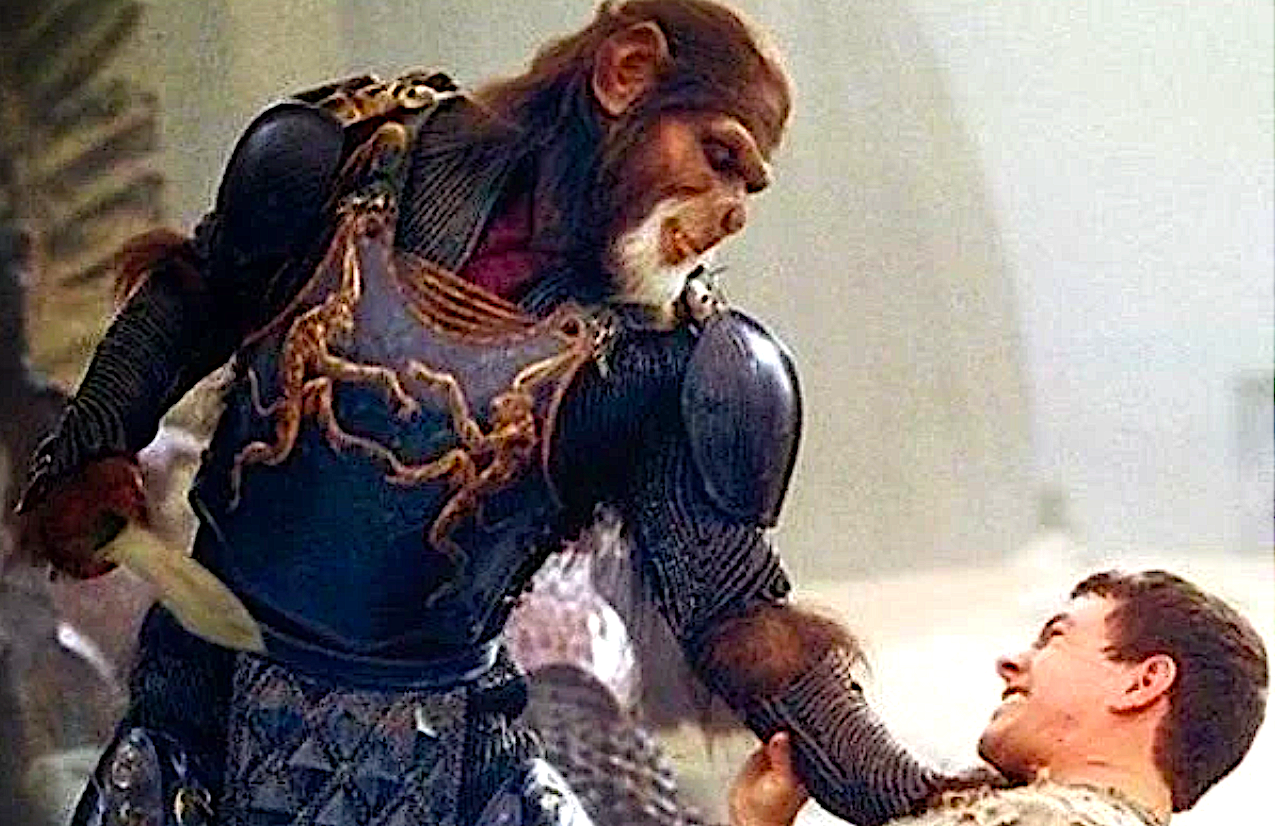
Oscar-winning makeup master Rick Baker provided the astonishingly realistic prosthetics for “Planet of the Apes”, and the effects are quite convincing. Well, except for Helena Bonham Carter’s Ari chimp character, which often looks like something out of Dr. Seuss’s Whoville with her pronounced muzzle and rodent-like appearance (An apt comparison since Baker also did the special makeup effects for “How the Grinch Stole Christmas” the previous year).
That aside, Baker’s practical magic on the movie is fantastic and one of the production’s finest achievements. The man who created the makeup for “King Kong,” “An American Werewolf in London,” “Michael Jackson’s Thriller,” “Harry and the Hendersons,” “Men in Black,” and “The Wolfman” designed some of the best simian masks ever seen on screen.
Baker’s earlier work on films like “Gorillas in the Mist” and “Mighty Joe Young” made him a natural for the job, and he truly shined here. Charlton Heston even made a cameo appearance as Zaius, a character from the 1968 original.
The Baffling Time-Tripping Plot
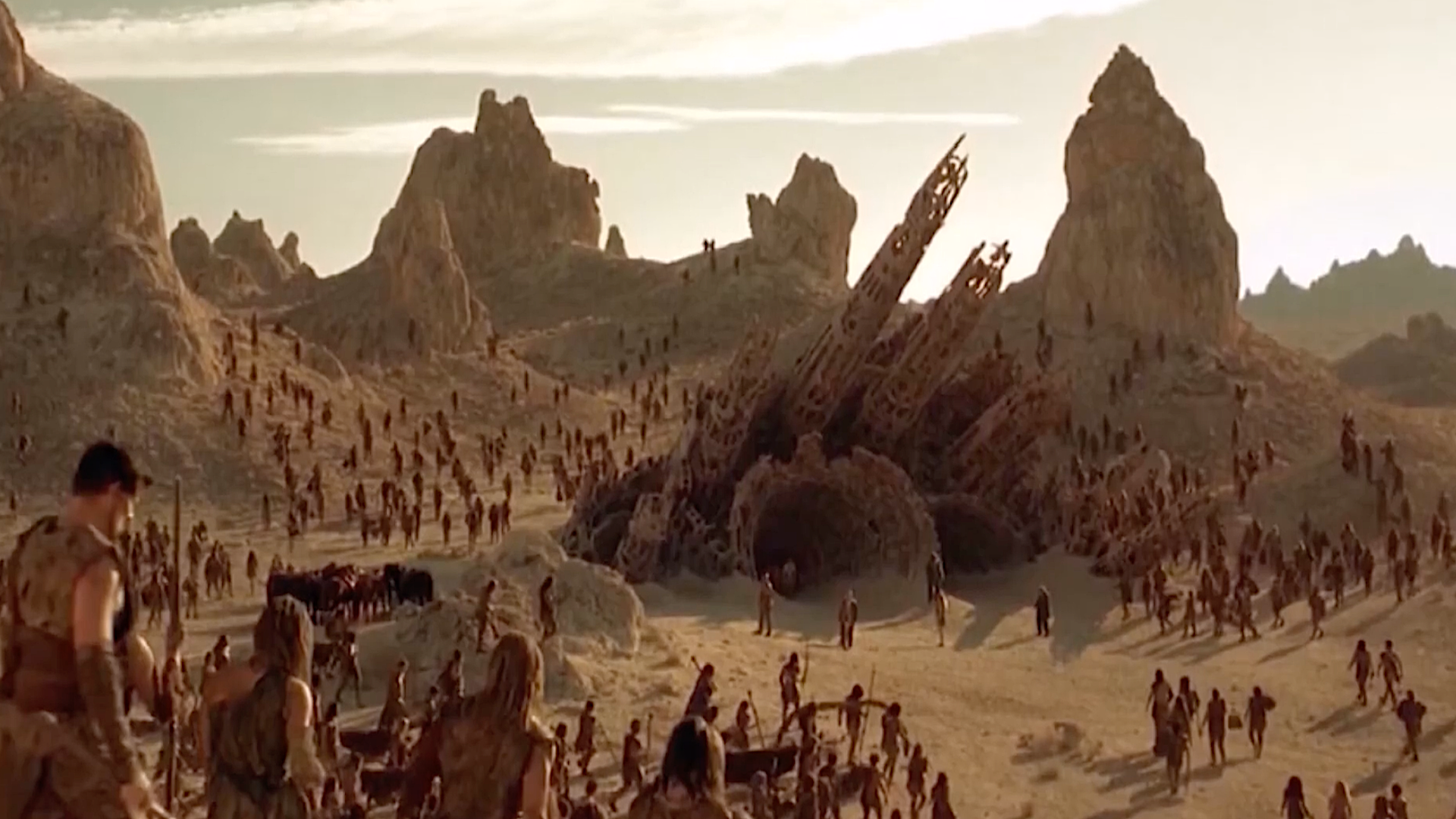
The confusing screenplay by Mark Rosenthal, William Broyles Jr and Lawrence Konner was cobbled together at the last minute and was still being rewritten as cameras began rolling.
It’s a soulless retelling of the 1968 version that relies on a few bad one-liners and uninspired performances by a cadre of fine performers, relegated to delivering flat dialogue and clunky exposition amid some cheap-looking soundstage sets.
A miscast Wahlberg plays Captain Leo Davidson, an astronaut scientist marooned on the planet Ashlar where apes are the masters and humans their inferior slaves.
He follows a genetically modified chimpanzee pilot named Pericles into a cosmic storm that engulfed their research station, Oberon, only to be transported to the year 5021, where humans and apes exist in a reversed society caused by the Oberon’s crash thousands of years before his arrival. Those super-smart chimps, gorillas, and orangutans eventually evolved and rebelled against their human masters.
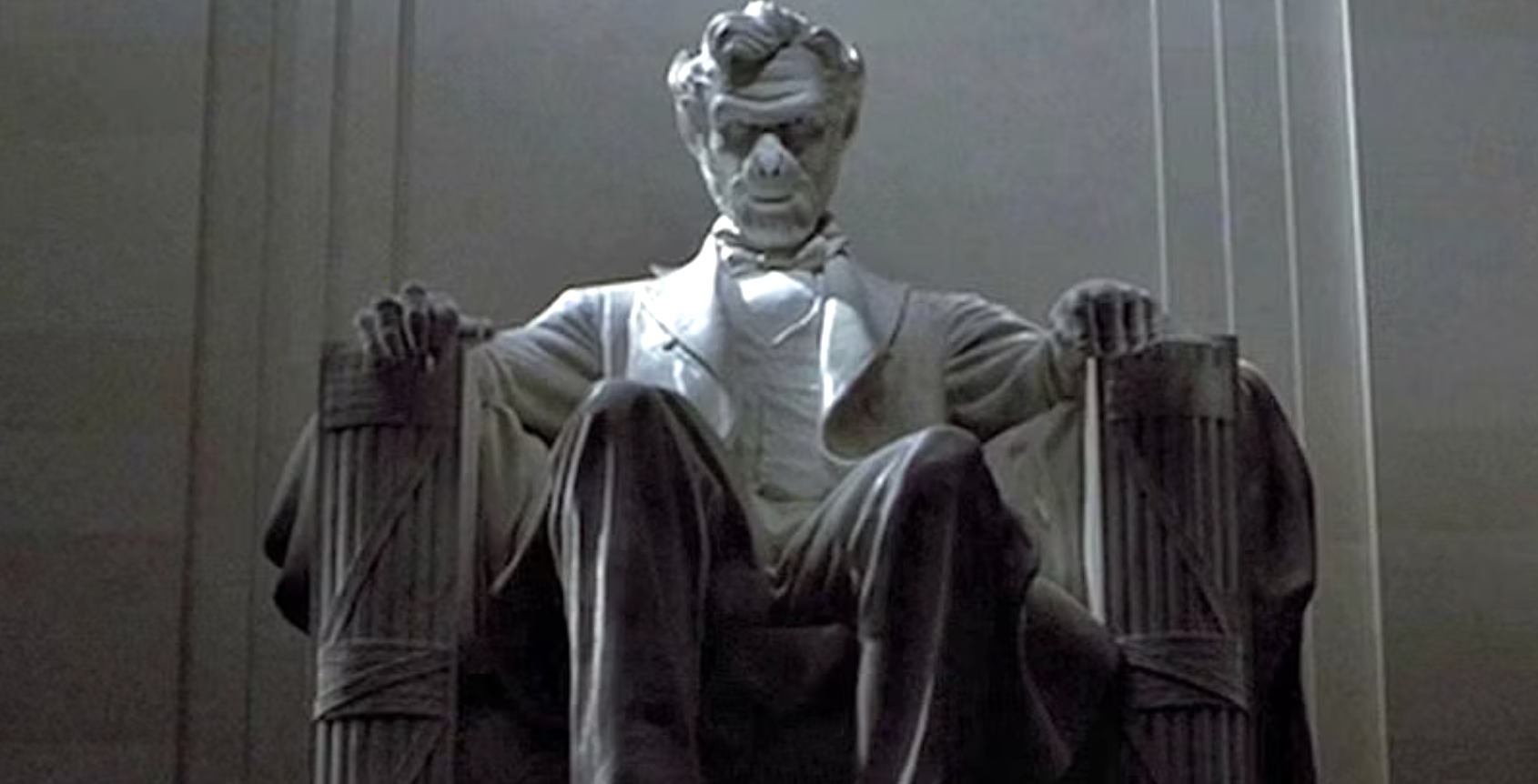
Leo Davidson’s time-traveling odyssey goes from 2029 all the way to the 51st century and then back again to his own era, where things have gone totally haywire. The twist ending is infamous. Davidson returns home to Washington, D.C. to find a marble monument of the human-hating warlord General Thade has replaced the iconic Abraham Lincoln statue.
This alternate timeline is a head-scratching “Ape Lincoln” finale that attempts to imitate that famous Statue of Liberty shocker seen in the original Planet of the Apes. It’s a controversial end to Burton’s rushed reimagining and feels forced.
It seems possible that Burton was attempting to be respectful of Pierre Boulle’s 1963 novel by revealing a modern ape-dominated world in the end, yet at the same time recalling the sensation of that nostalgic beach scene with Lady Liberty in the sand. Whatever he was aiming for, he missed.
Danny Elfman’s Magnificent Music
Ah, the sonic magic of Danny Elfman ends our tribute to “Planet of the Apes” as a salute to Burton’s ambitious folly. Elfman and Burton are a melodic combo whose collaboration goes back to 1985’s “Pee-Wee’s Big Adventure” and here Elfman goes for a bombastic sound that utilizes a full range of instrumentals.
His robust, under-appreciated score is composed with droning synthesizer undercurrents, old-fashioned action adventure fanfares, and intense rapid-fire tracks punctuated by brass exclamations and roaring percussion.
It’s a more serious piece of musical work that safely avoids the sentimentality and whimsy of earlier scores for Tim Burton projects. This reflects an important evolutionary step for Elfman’s maturity as an artist, mirroring some of the movie’s main themes.
“I had been more concerned that the score was going to be more of a traditional, very aggressive Jerry Goldsmith score, which he does so brilliantly, and the fact that it was such an ethereal, otherworldly score, immediately eased all problems I may have had, because I saw that there was not going to be any overlap,” Elfman told Soundtrack Magazine.
“I would have been more concerned, if his score was more traditional and aggressive, of what to avoid, so as to not cross over or step on his toes. So it really became very easy once I watched the movie again after 30-something years. The score was such a beautiful, odd, dissonant piece of work. I felt clearly, this is a completely different animal – no pun intended. Having just seen a rough cut of the film, I knew it was going to be a very big, aggressive, muscular, kind of a tribal, driving score.”
In summation, anyone attempting to remake the original “Planet of the Apes” was bound to butt up against intense scrutiny and comparison.
Even if Burton’s vision came up far short of what was intended, we still respect the maverick filmmaker for taking on a tough undertaking on the film’s milestone 25th anniversary.
‘Planet of the Apes’ is available to watch on Hulu in the US, and on Disney+ in the UK.

Watch ‘Planet of the Apes’ on Hulu:
Hulu with Ads: $11.99/month or $119.99/year
Premium (No Ads): $18.99/month
About the Author
