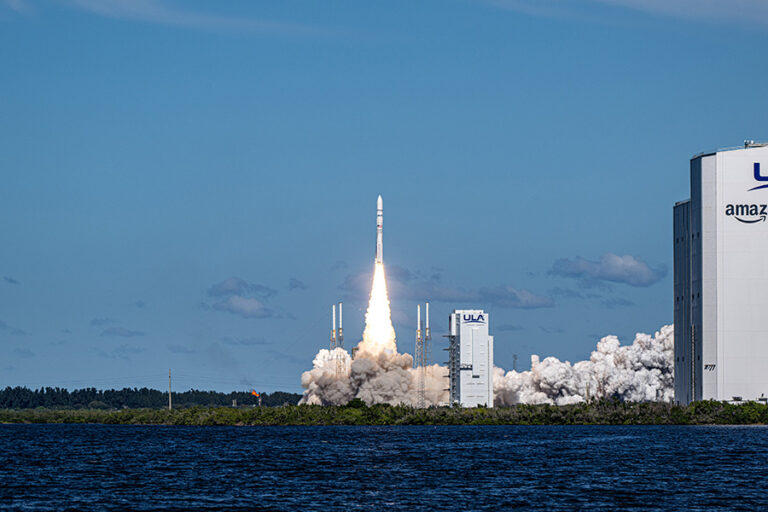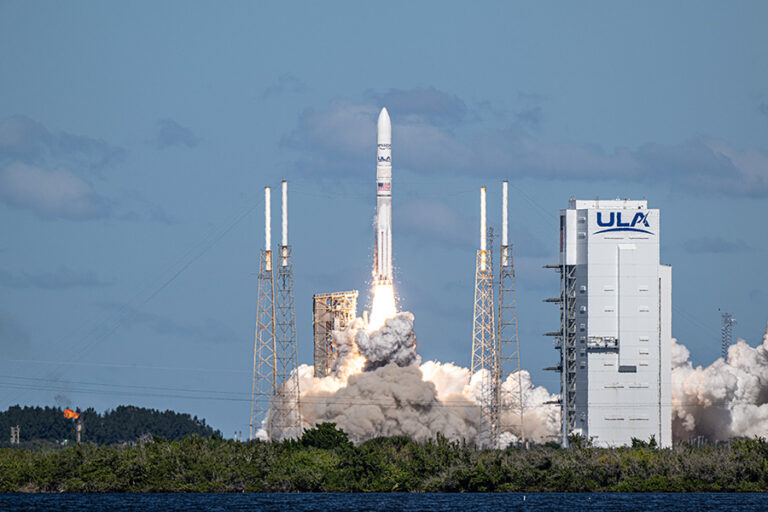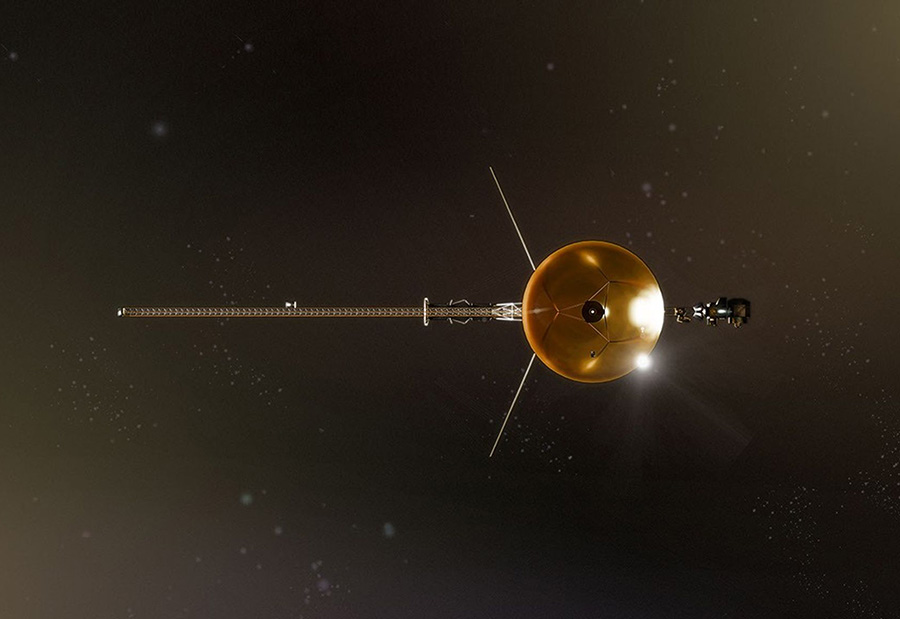
NASA’s Voyager 1 spacecraft became the first human-made object to reach a distance of one light-day from Earth early Wednesday, crossing the threshold at 5:16:07 a.m. EST (10:16:07 UTC) as it sped away from the sun at nearly 38,000 mph.
At that moment the probe was about 16.1 billion miles (25.9 billion kilometers) from Earth, the distance light travels in 24 hours. A radio command sent from NASA’s Deep Space Network now takes a full day to reach the spacecraft, and its reply takes another day to come home.
The milestone will not produce any physical change in the spacecraft, NASA’s Jet Propulsion Laboratory has said. But it comes at a delicate moment for a mission that has outlived and surpassed nearly all expectations. Voyager 1 is down to two working science instruments, its power supply is shrinking with each passing year. Last month it went silent for two days before engineers reestablished contact.
Kareem Badaruddin, Voyager’s interstellar mission manager and one of just three full-time team members keeping the aging Voyagers healthy and on course, harkened back to the program’s decades-long history when he reflected on its lead craft hitting the one-light-day mark.
“I was telling someone about Voyager being like a relay race, and I’m just the guy carrying the baton for now. But you know, thousands and thousands have come before me, and now it’s my turn to do the best I can do for these spacecraft,” Badaruddin said, before bluntly assessing the sheer uniqueness of Voyager’s mission: “It has never happened before. It may never happen again.”
Alan Cummings, a senior research scientist at Caltech who has worked on Voyager’s Cosmic Ray Subsystem since before the twin spacecraft departed Florida in 1977 and the last person to touch the spacecraft before launch, made it clear the one-light-day achievement was “not a scientific milestone.”
“It is an engineering milestone, though,” Cummings said in an interview with Spaceflight Now. “It’s amazing — these engineers at JPL who designed and built this spacecraft with all the redundancy (Voyager) has in order to last this long and go this far, and it’s also a tribute to the engineers at the Deep Space Network who collect our data and send commands to our spacecraft.”
That data, which now takes 24 hours to reach Earth, is beamed to Earth from Voyager 1’s 12-foot-wide antenna by a transmitter with roughly the power of a 23-watt light bulb.
Voyager 1 lifted off on Sept. 5, 1977, from Launch Complex 41 at what is now Cape Canaveral Space Force Station, atop a Titan 3E-Centaur rocket. Its twin, Voyager 2, had launched 16 days earlier. Voyager 1’s faster trajectory carried it past Jupiter in March 1979 and Saturn in November 1980. A close flyby of Saturn’s moon Titan then bent its path up and out of the plane of the planets.
Voyager 2 is trailing behind the one-light-day mark but was still more than 13.4 billion miles from Earth as of Wednesday, according to NASA’s Voyager Tracker, with messages to the spacecraft taking about 20 hours to arrive. It took a different route than Voyager 1 to fly past Uranus and Neptune in the 1980s and is on pace to reach one light-day from Earth in November 2035.
All along the way, both craft contributed to landmark astronomical discoveries, at first closer to home as Voyager 1’s flyby of Io revealed volcanic activity on another planet’s moon and as Voyager 2 completed flybys of the solar system’s most distant planets before continuing on toward interstellar space, or the region between the stars.
On Feb. 14, 1990, the spacecraft turned its cameras back toward home for a final “family portrait” of the solar system, which included the image of Earth that became known as the “Pale Blue Dot.” The cameras were then shut off for good. On Feb. 17, 1998, Voyager 1 passed Pioneer 10 to become the most distant human-made object.
The family portrait was Carl Sagan’s idea. The Cornell University astronomer had first proposed in 1981 that one of the Voyagers turn its cameras back toward Earth, and he had already helped ensure the spacecraft carried more than scientific instruments.
A committee Sagan chaired assembled the Golden Record aboard each Voyager: a 12-inch gold-plated copper disk holding 115 images, spoken greetings in 55 languages, sounds of surf, wind, thunder, birds and whales, and about 90 minutes of music, packed with a cartridge, a needle and symbolic instructions for playing it.
“The launching of this bottle into the cosmic ocean says something very hopeful about life on this planet,” Sagan said in 1977 at a time when Cold War tensions and fears of nuclear war cast a dark shadow over humanity’s future.
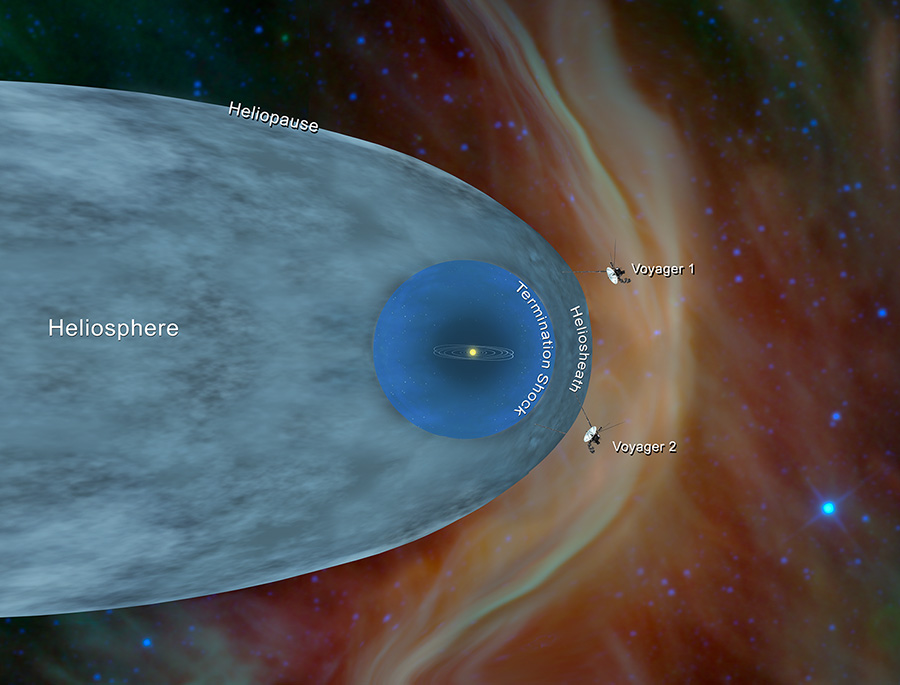
On Aug. 25, 2012, at about 122 astronomical units, or 122 times the distance between Earth and the sun, Voyager 1 crossed the heliopause, becoming the first spacecraft to reach interstellar space. Voyager 2 followed in November 2018.
Cummings’ instrument provided some of the clearest evidence of the crossing. In a 2013 paper in the journal Science, the team reported that low-energy ions from inside the heliosphere “soon completely disappeared,” while the intensity of cosmic rays from outside the heliosphere “abruptly increased.”
Inside the heliosphere, the solar wind and its magnetic field filter out many of the lower-energy galactic cosmic rays. Beyond the heliopause, Voyager 1 could conduct measurements before the sun exerted its powerful influence on low-energy galactic cosmic rays, something no other spacecraft has done.
“That spectrum cannot be determined or deduced from any observations near Earth,” Cummings said. “You have to go there to measure it… When we first launched, we thought it was going to be a lot closer than it turned out to be.”
Those measurements have given scientists’ their first direct look at the solar system’s galactic neighborhood.
The Voyagers have upended several predictions, among them what the magnetic field beyond the heliopause — the boundary where solar wind gives way to the thin gas between the stars — would look like. Its direction did not rotate to the expected interstellar orientation, according to a 2024 presentation by Voyager project scientist Linda Spilker.
“That was going from measuring the interplanetary magnetic field of the sun to supposedly the galactic magnetic field,” Cummings explained. “But those couldn’t be lined up. So that is an important measurement to keep measuring gradually.”
Instead, the field just beyond the boundary ran parallel to the sun’s own, JPL has reported. Only in recent data has its direction begun turning toward the expected interstellar orientation, and models suggest it won’t fully align for hundreds of astronomical units, according to a 2026 study by members of the Voyager magnetometer team.
Much of the spacecraft’s ability to study its region of interstellar space is now handicapped. To conserve power, NASA turned off the Cosmic Ray Subsystem on Voyager 1 on Feb. 25, 2025, and the Low-Energy Charged Particle instrument on April 17, 2026. That left only the magnetometer and the plasma wave instrument operating.
Even with some of their trademark instruments powered down, the pair of Voyagers — ever speeding onward away from humanity — never turn away from their home planet.
“Both spacecraft are kind of special; they’re always Earth pointed, and always telemetering, always downlinking science data to Earth, and that’s unusual,” Badaruddin said. “Most spacecraft have observation periods and downlink periods, and they’re turning back and forth between the two. But the Voyagers, none of their instruments require pointing. None of the instruments that are on.”
Voyager 1 draws its power from three radioisotope thermoelectric generators, which convert heat from decaying plutonium into electricity. Their output drops by about 4 watts a year, according to JPL. In early September, engineers replaced three power-consuming devices with lower-power alternatives, an operation the team nicknamed the “Big Bang.” Without it, another instrument might have been switched off as early as summer 2027.
Then, on Oct. 18 and 19, the Deep Space Network — NASA’s means of communicating with far-flung spacecraft — failed to detect Voyager 1’s signal on two scheduled attempts 24 hours apart. Contact resumed Oct. 20. Engineers determined that one group of thrusters had gone offline and the spacecraft’s fault protection system had switched to backups, but as of JPL’s Oct. 29 update, the cause was still under investigation.
“This is the first time we’ve seen the spacecraft do something like this,” Badaruddin said in that update.
Voyager’s JPL team believes the craft have enough power to continue communications with Earth through about the early 2030s.
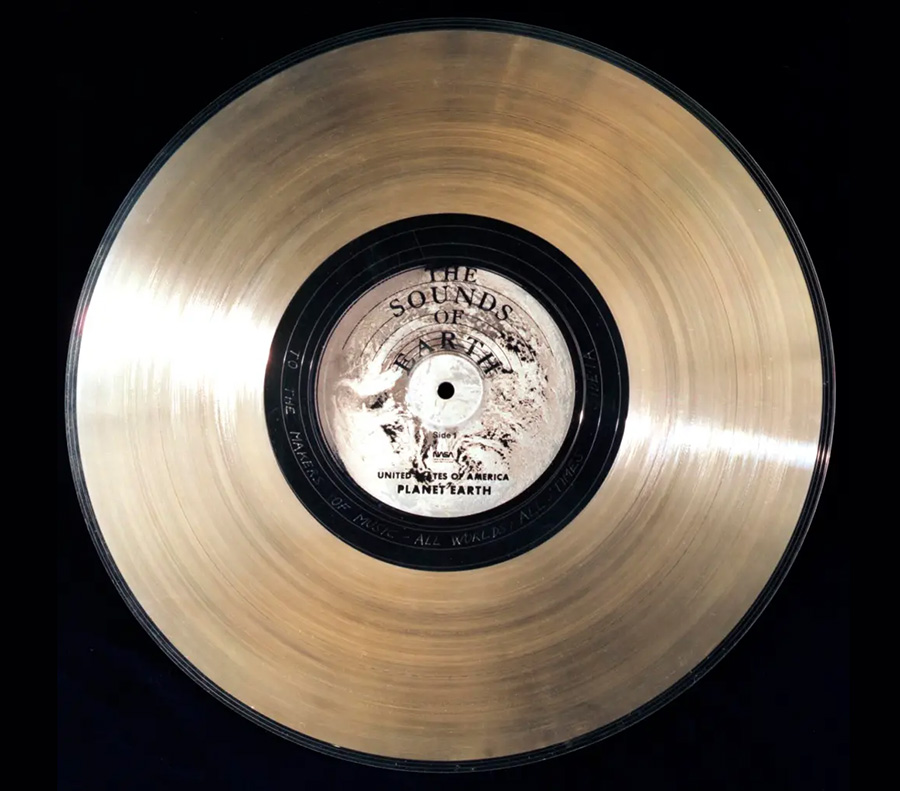
As Voyager 1 neared the one-light-day mark, Cummings reflected on what it meant to be the last human to have touched a spacecraft that almost certainly will outlive the human race as it continues on its trajectory toward the galactic core, one that will carry on for potentially billions of years after both Voyagers’ power supplies run dry.
“It’s a pretty incredible feeling,” Cummings said. “I’m unique in this regard, but what it brings up to me is the legacy of Voyager. The Voyagers were the first to do a lot of things: the first and only to Uranus and Neptune, first to cross the termination shock of the solar wind, and the first to be in interstellar space. But they’re going to also be the last, one of the last pieces of evidence that humans ever existed on Earth.
“In billions of years, the sun will expand and the Earth will be extinguished, but the Voyagers will still be going, carrying the Golden Record with the sights and sounds of what once was the Earth. And that, to me, is just mind-boggling, and I feel special about that.”
About the Author