Looking for a sky event this week? Check out our full Sky This Week column.
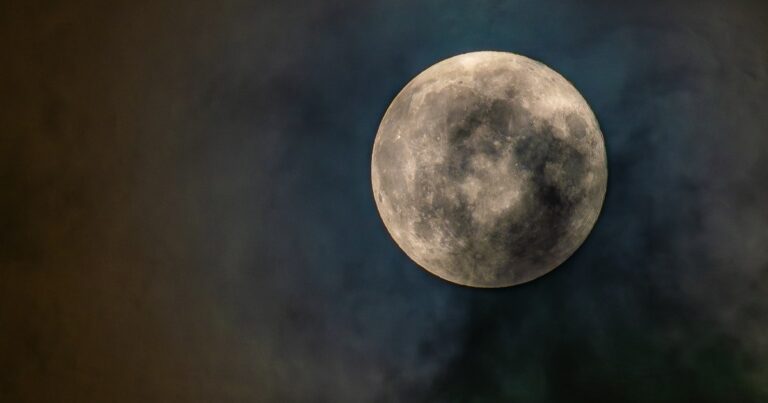
September 26: The Harvest Moon
The Moon now passes 7° north of Saturn at 8 A.M. EDT. The ringed planet currently glows at magnitude 0.3, as bright as it will get this year. It will reach opposition in just another week.
By evening, the Moon has pulled a bit farther away — around 10 P.M. CDT, our satellite is more than 13° northeast of Saturn. The ringed planet is the brightest point of light in the eastern sky at that time, located near the border of Cetus and Pisces (within the bounds of the former).
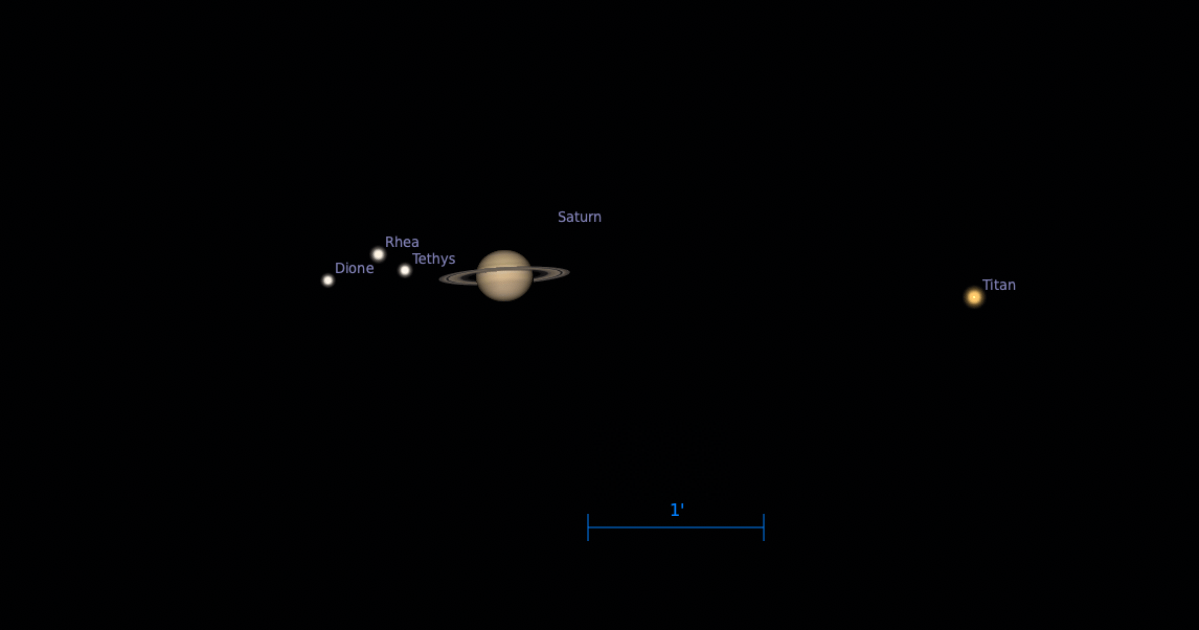
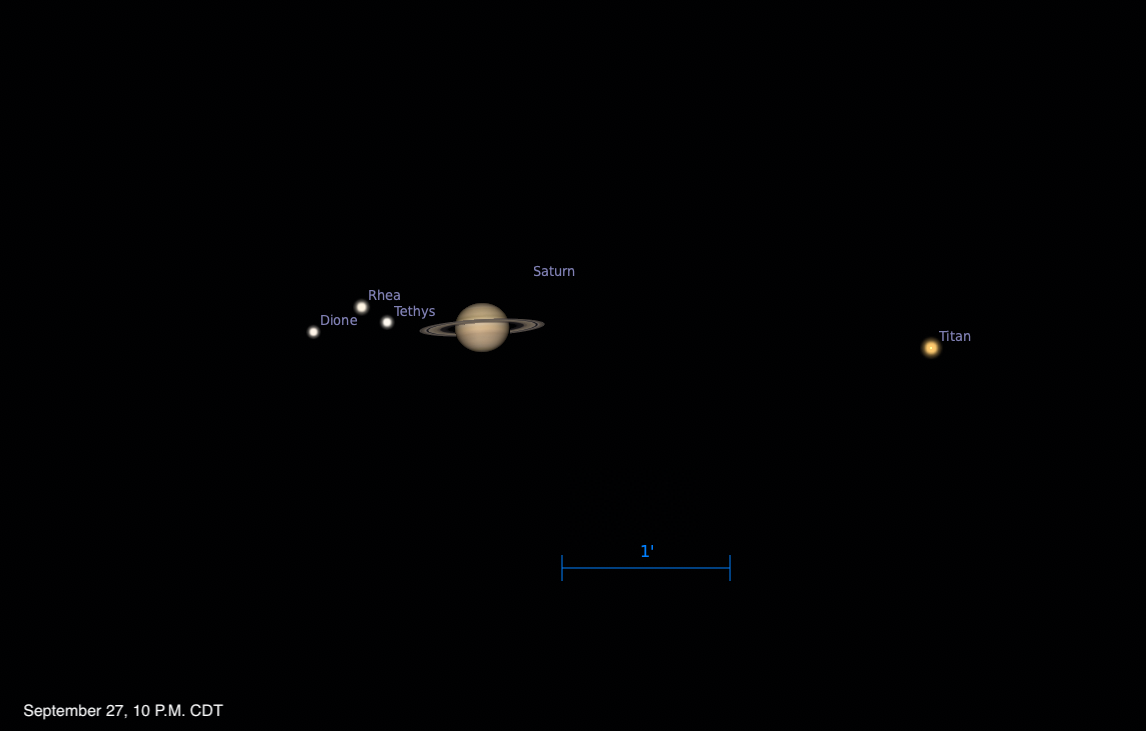
Through a telescope, Saturn’s disk spans 20”, while its rings are more than twice that width, stretching 44” from end to end. Look for mid-8th-magnitude Titan, Saturn’s largest and brightest moon, now about 2.6’ west of the planet’s center. Over the next few days, Titan’s orbit will bring it closer to Saturn, and the moon will pass south of the planet early on the 30th.
Don’t be fooled by an interloping field star just to Saturn’s southwest tonight, although fortunately the 11th-magnitude star is much fainter than Titan — as well as Saturn’s next three brightest moons, 10th-magnitude Tethys, Rhea, and Dione, all orbiting closer to Saturn and its rings. A couple of brighter field stars shine a little farther away, to Saturn’s north and east as well, all farther out than its moons.
Sunrise: 6:52 A.M.
Sunset: 6:49 P.M.
Moonrise: 7:05 P.M.
Moonset: 7:55 A.M.
Moon Phase: Waning gibbous (97%)
*Times for sunrise, sunset, moonrise, and moonset are given in local time from 40° N 90° W. The Moon’s illumination is given at 10 P.M. local time from the same location.
Alison Klesman is senior editor of Astronomy magazine. She holds a Ph.D. in astronomy and has studied a variety of topics, from minor planets to supermassive black holes.
About the Author