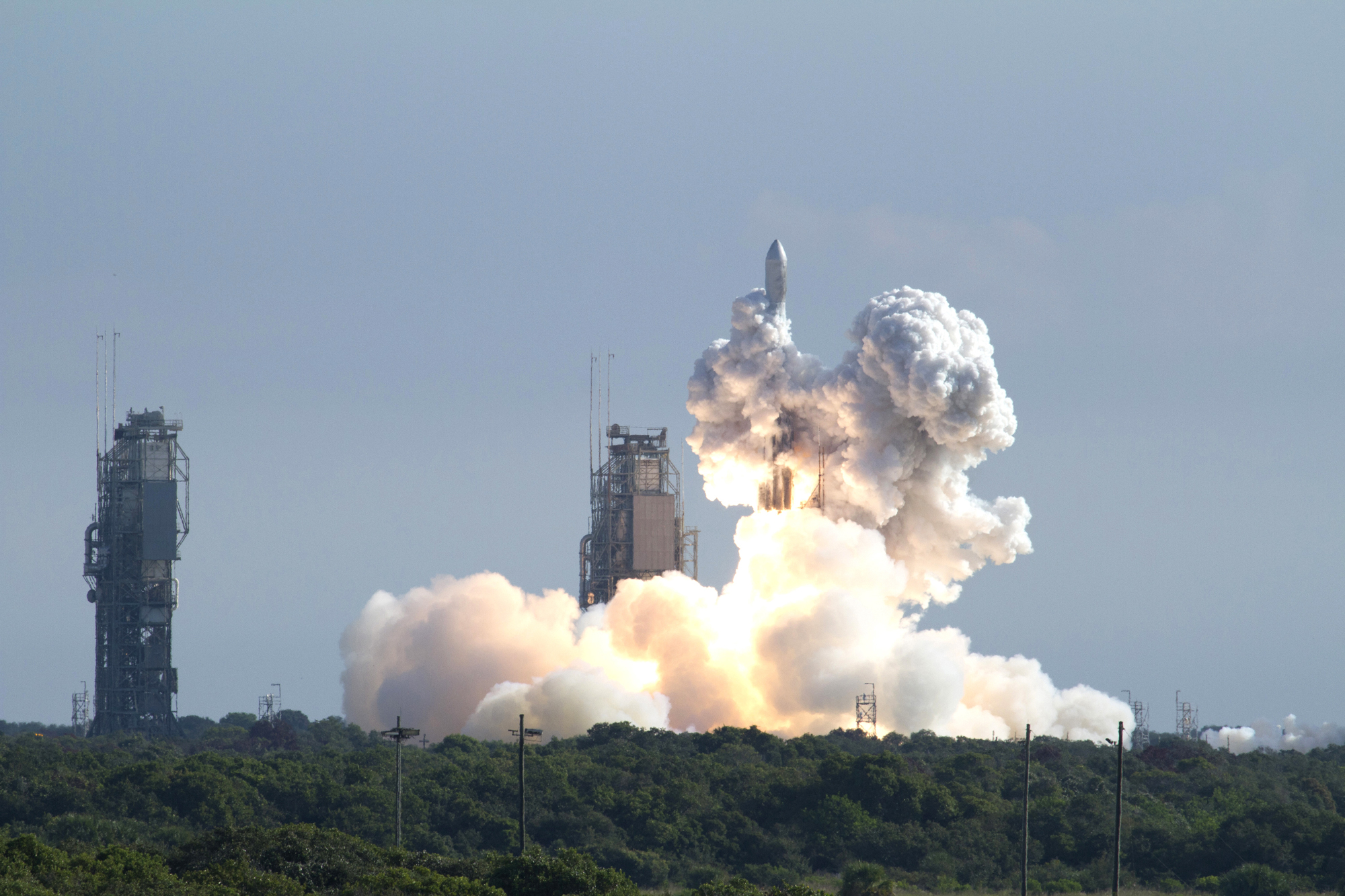
On Sept. 10, 2011, NASA’s GRAIL spacecraft launched on a mission to the moon!
GRAIL, which stands for Gravity Recovery and Interior Laboratory, was sent to the moon to map its gravitational fields. Scientists could study the moon’s interior structure by looking at maps of the moon’s gravity.
Asteroid impacts from billions of years ago left dense pockets of material under the lunar surface, which can exert extra gravitational pull on spacecraft orbiting the moon. So by measuring that gravitational pull, the GRAIL mission could reveal information about what lies beneath the surface.
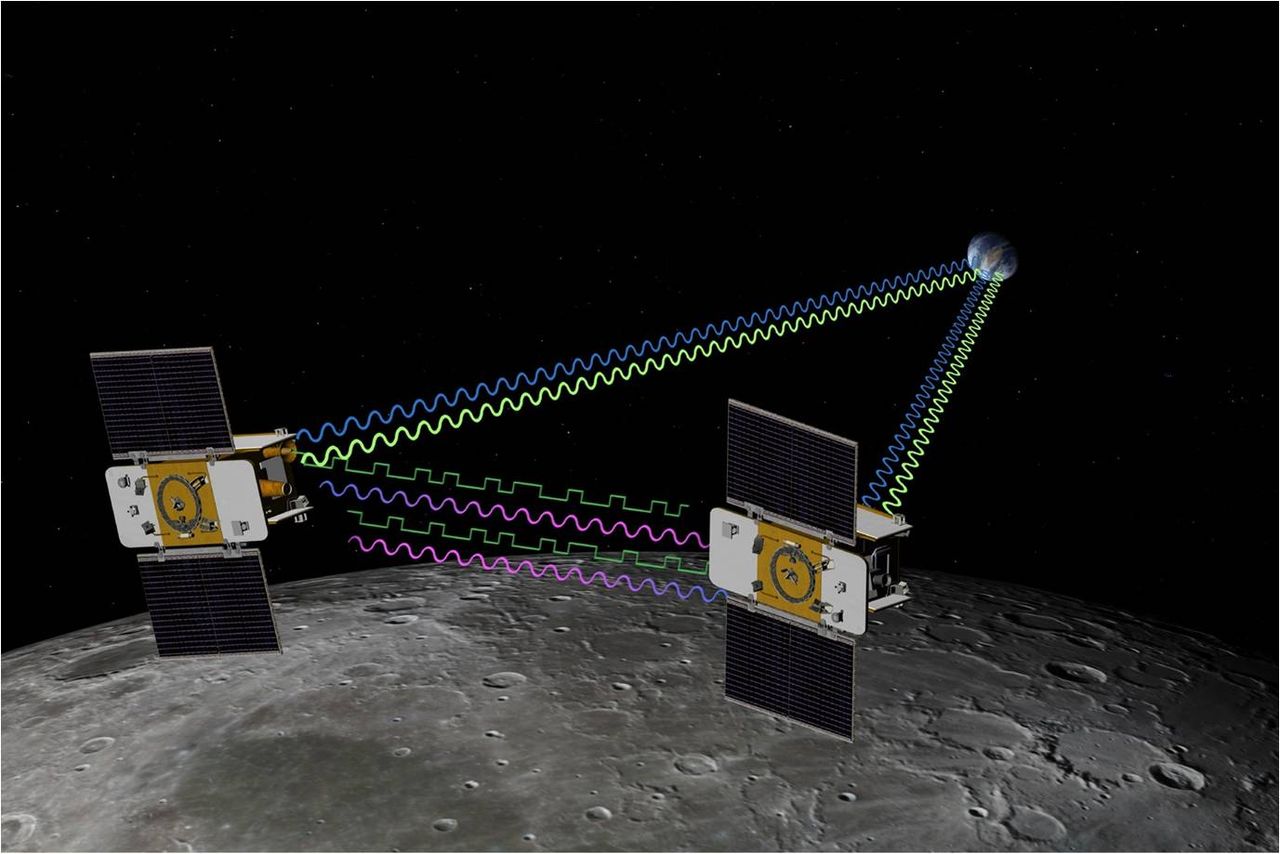
The mission actually consisted of two twin spacecraft named Ebb and Flow, which would fly in tandem around the moon to map variations in its gravitation field. Both lifted off on the same Delta II rocket from Cape Canaveral, Florida and arrived in lunar orbit almost four months later.
They mapped the moon for about nine months before NASA decided it was finished with the mission, and the two orbiters crashed into the moon.
Why it mattered
The moon is a weird place. It may look like a cold, gray ball of solid rock, but its density varies from location to location due to odd “mass concentrations” (or mascons for short) buried under the lunar surface. That leads to a strange, lumpy gravity that’s not uniform across the lunar surface.
That’s where GRAIL’s Ebb and Flow probes came in. Each of the twin spacecraft carried three instruments to map the interior of the moon. Those included a Lunar Gravity Ranging System, a Radio Science Beacon and a camera called MoonKam Lunar-Imaging system.
Together, the instruments mapped the mascons on the moon in extreme detail to monitor where lunar gravity increased from the norm. Astronomers had long suspected that mascons on the moon and other planets formed during violent asteroid impacts.
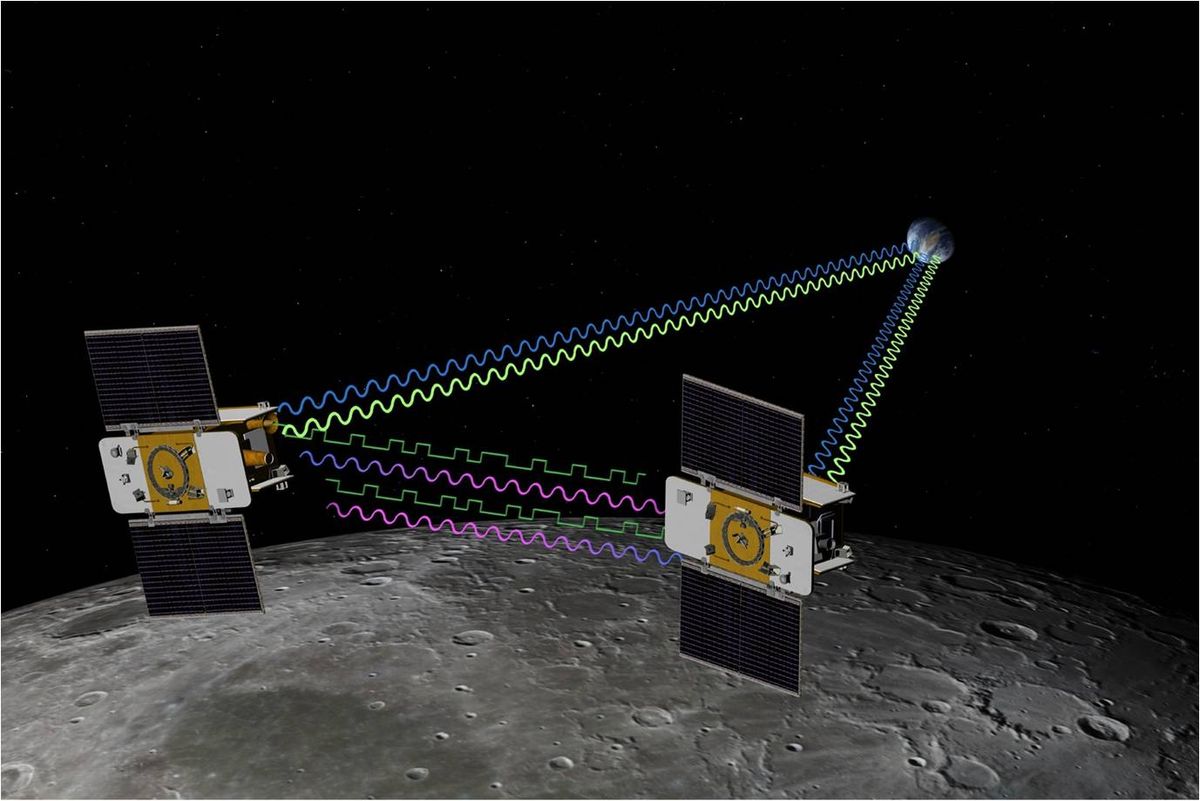
(Image credit: NASA/JPL)
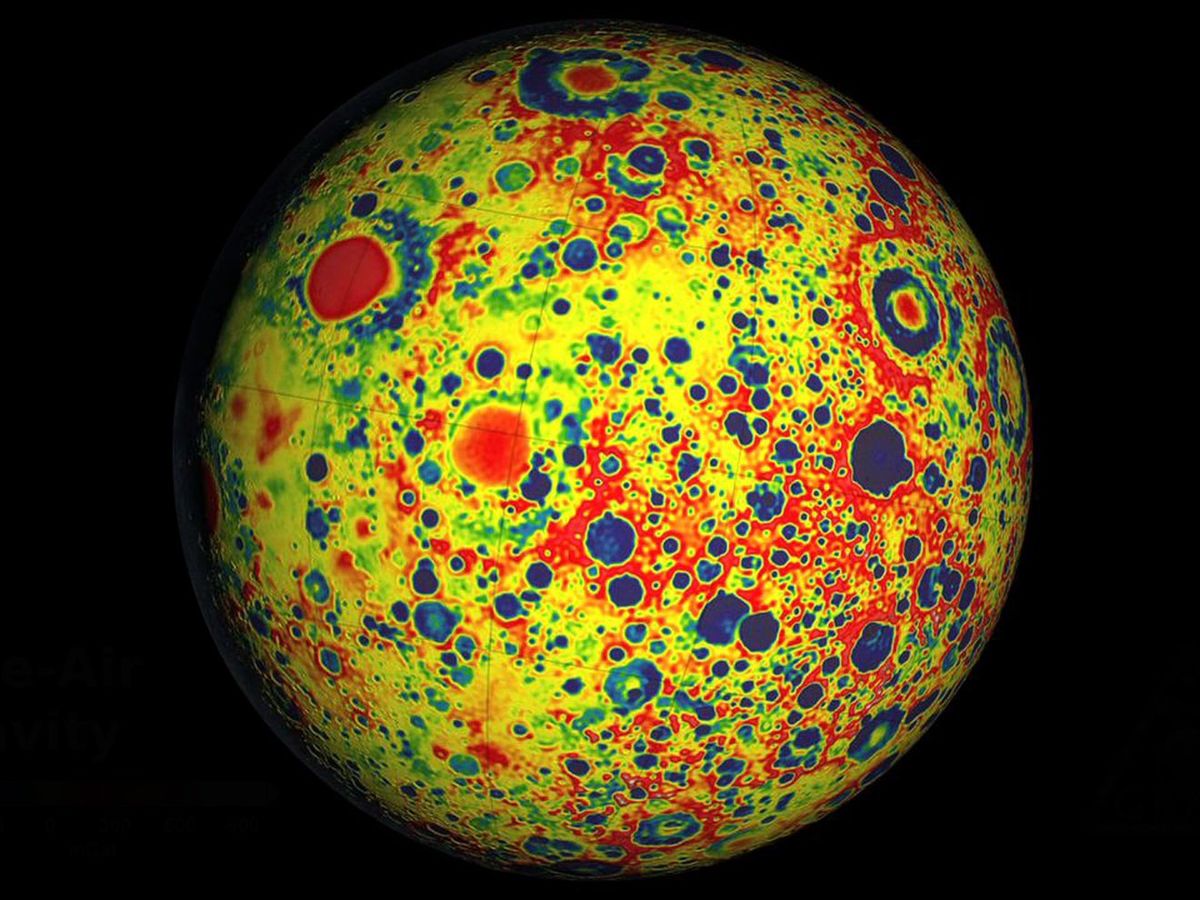
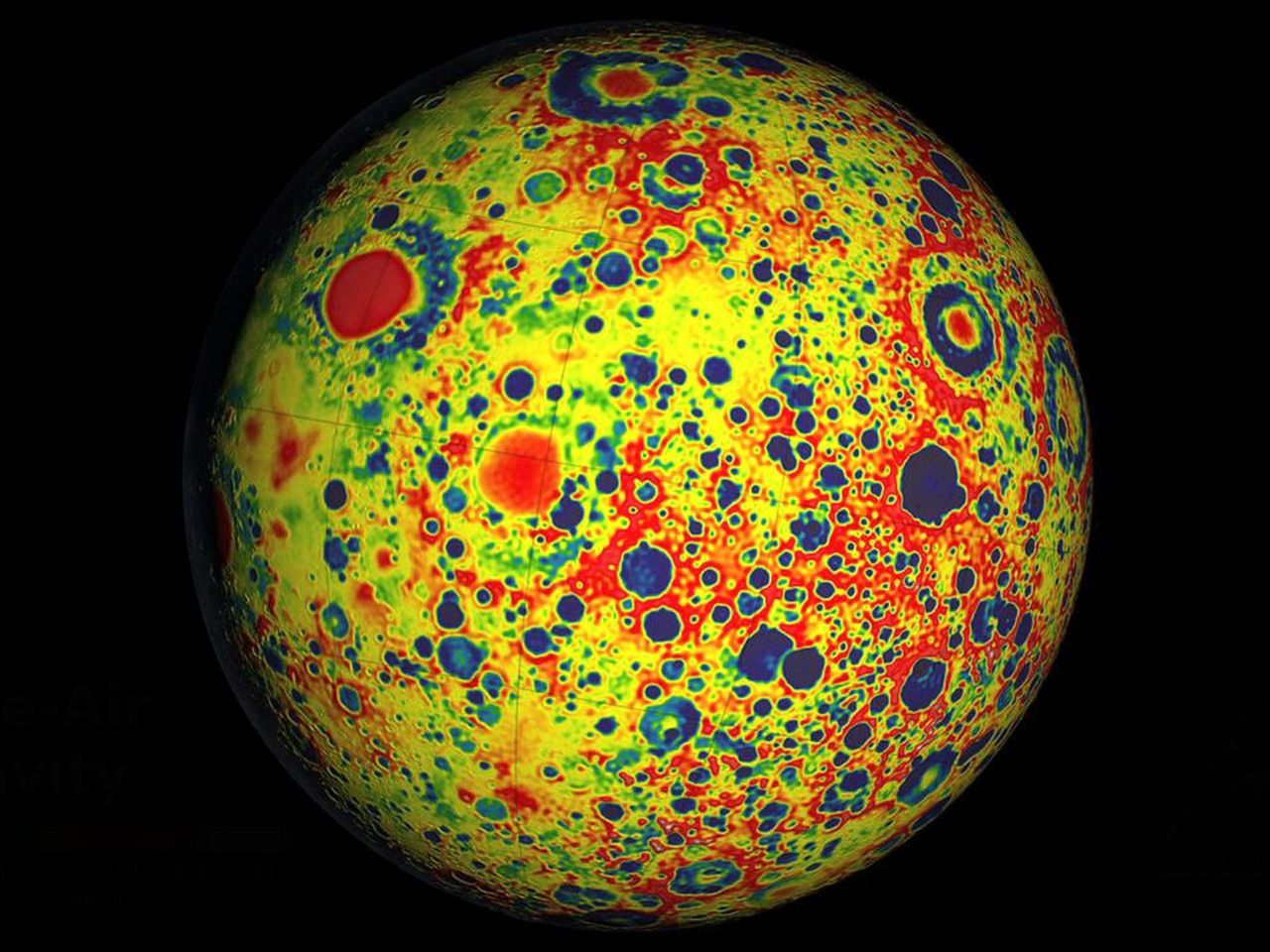
“GRAIL data confirm that lunar mascons were generated when large asteroids or comets impacted the ancient Moon when its interior was much hotter than it is now,” Jay Melosh, a GRAIL co-investigator at Purdue University, said in a NASA overview.
The MoonKam tool was actually a student experiment (MoonKam is short for Moon Knowledge Acquired by Middle School Students). It was built by undergradutate students at the University of California, San Diego in partnership with the Sally Ride Science foundation to encourage younger students to study science and space. (The names Ebb and Flow as GRAIL probe names were also suggested by 4th grade students at Emily Dickinson Elementary School in Bozeman, Montana, as part of a national competition.)
The $496 million GRAIL probes orbited the moon in an extremely low orbit, coming within 30 miles (50 km) of the lunar surface at their closest approach. They were separated from each other at distances that ranged from 109 miles to 140 miles (175 km to 225 km).
NASA crashed the GRAIL probes into the moon on Dec. 17, 2012 once its fuel reserves reached the point that it could not maintain its low lunar orbit. They crashed into a crater rim near the moon’s north pole to prevent them from randomly crashing uncontrolled into someplace like an historic Apollo moon landing site.
Want more space history? Check out our full On This Day In Space Story archive and watch our On This Day In Space videos on YouTube.

On this day in space! Sept. 9, 1982: The 1st private rocket Conestoga 1 launches from Texas ranch
About the Author