This post was originally published on this site.
Witness how over the last eight years, the ESA/JAXA BepiColombo mission has been travelling through the inner Solar System and aligning itself with Mercury’s orbit. So far, it has travelled 9.9 billion km and completed nine ‘planetary flybys’ to help steer its way. In the video, you can see the spacecraft fly past Earth once, Venus twice, and Mercury six times.
Since launching on 20 October 2018, BepiColombo has been travelling as a composite spacecraft made up of ESA’s Mercury Planetary Orbiter (MPO), JAXA’s Mercury Magnetospheric Orbiter (Mio), and the Mercury Transfer Module (MTM) that carried the two orbiters to Mercury.
We’ve shared photos and videos before, taken by the spacecraft’s three monitoring cameras (M-CAMs) on MTM. But this is the first time we’ve compiled them into a video of the mission’s complete journey so far.
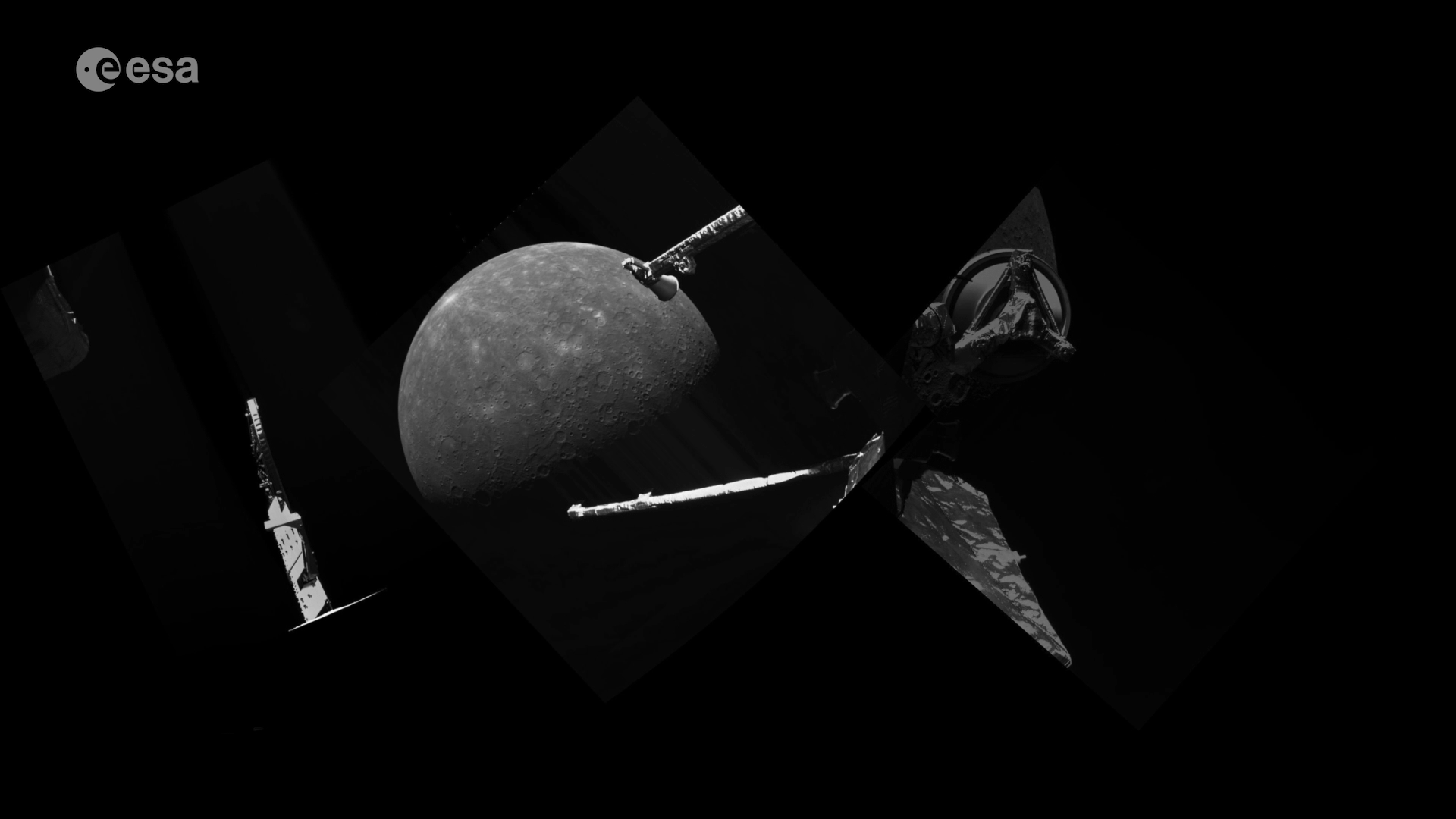
The monitoring cameras were designed to keep an eye on the spacecraft itself. In the foreground, you can see one of MTM’s solar arrays (M-CAM 1, left), MPO’s medium-gain antenna and magnetometer boom (M-CAM 2, middle), and MPO’s high-gain antenna (M-CAM 3, right). The images have been positioned and oriented to approximately reflect the relative fields of view of the three M-CAMs.
As the M-CAMs have no shutter, many of the original images contain streaks due to light falling on the detectors during image read-out. These streaks have largely been removed for this video.
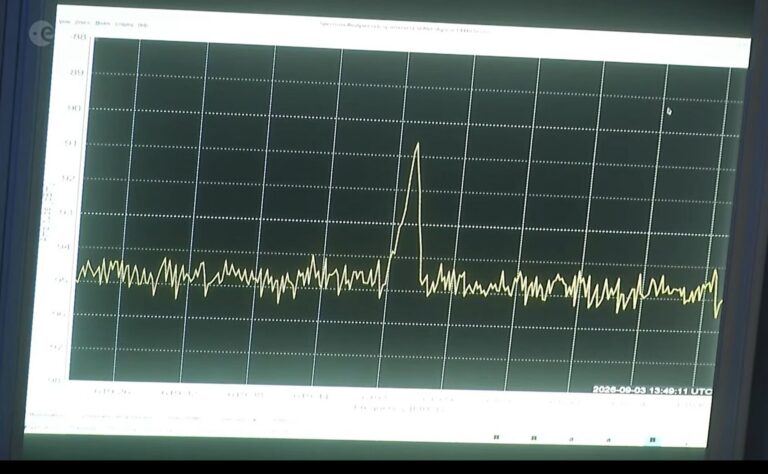
BepiColombo’s arrival at Mercury began on 3 September 2026, with MTM separating from the spacecraft stack. The two stacked orbiters will enter orbit around Mercury in November, and separate from each other on 9–10 December 2026. From that moment on, BepiColombo will be the first mission with two spacecraft orbiting planet Mercury at the same time.
MTM has no computer to control itself, and lacks an antenna to communicate with Earth. Now that it has separated from the rest, it will circle the Sun indefinitely, letting the two science modules get to work. We expect MTM to pass by Mercury at a distance of around 130 000 km in late October. After that it will enter interplanetary space, and not get any closer to Mercury.
For more about BepiColombo, click here.
For the raw M-CAM images, click here.
About the Author